

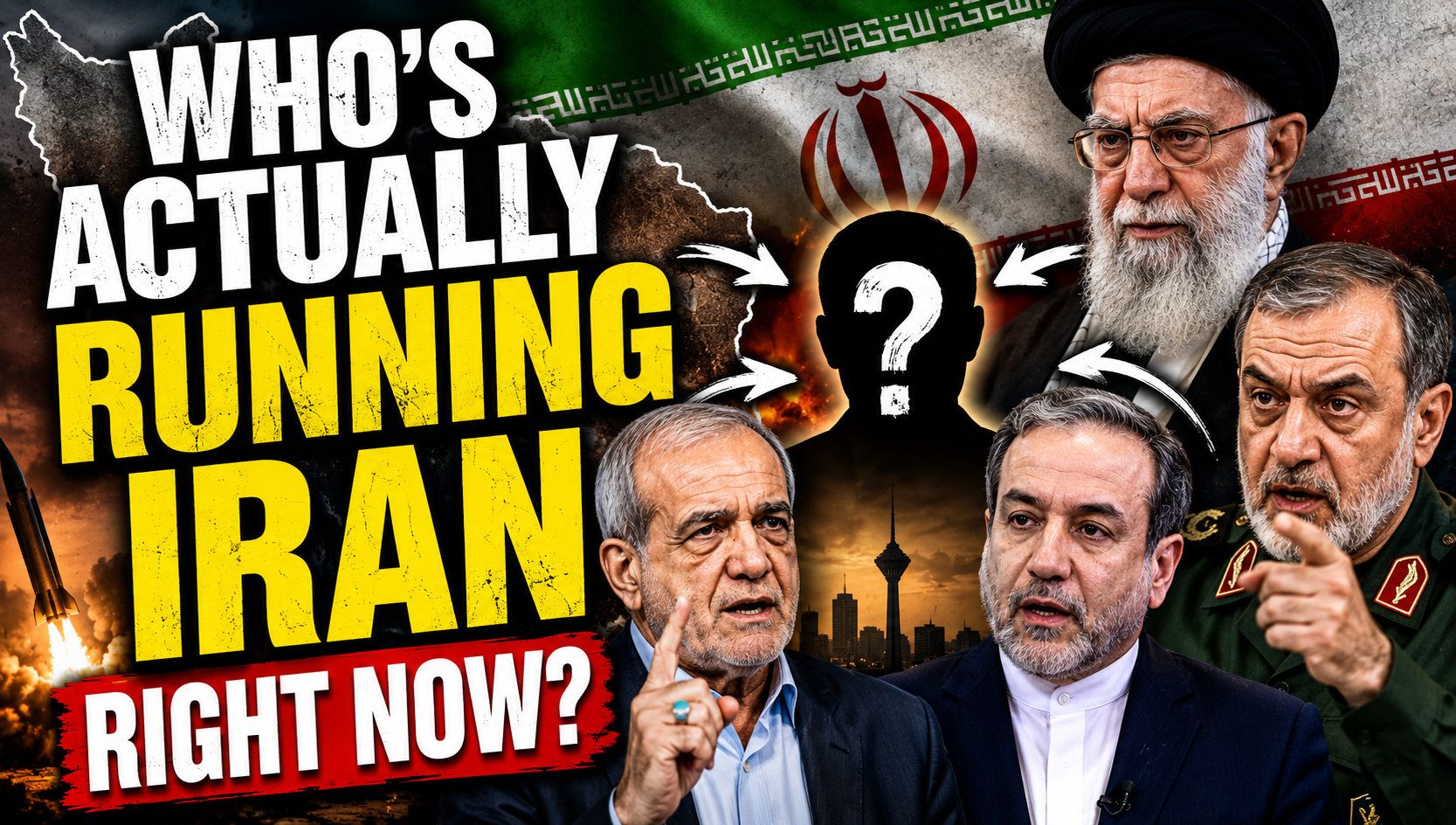
Iran’s leadership appears increasingly divided as conflicting reports over negotiations with the United States raise new questions about who is actually running the country.
Just one day after Iranian state-linked media reported that Tehran had halted communications with Washington, Foreign Minister Abbas Araghchi was forced into a flurry of diplomatic phone calls with foreign leaders, apparently attempting to reassure the world that negotiations remain alive.
The confusion began when the IRGC-linked Tasnim News Agency claimed Iran had stopped responding to American messages during indirect talks mediated by Pakistan. Within hours, however, Iran’s official state news agency published a denial from Araghchi, who insisted negotiations were still ongoing and dismissed reports of a breakdown as “speculation.”
The contradiction highlights a growing problem inside Tehran.
Ever since the death of Iran’s supreme leader, Ali Khamenei, during Operation Epic Fury, observers have noted increasing signs of dysfunction within the Islamic Republic. Khamenei often served as the balancing force between Iran’s civilian government and the powerful Islamic Revolutionary Guard Corps. Without him, competing factions appear to be sending conflicting messages both domestically and internationally.
President Donald Trump has publicly complained about the situation, reportedly telling advisers that negotiations have been complicated by infighting among Iranian officials.
According to reports, Trump previously canceled planned face-to-face talks, citing uncertainty over who actually speaks for Tehran.
Against that backdrop, Araghchi spent Tuesday conducting what Iranian media described as “intensive diplomatic outreach,” holding calls with officials from Pakistan, Qatar, Turkey, France, and Belgium. Discussions reportedly focused on the escalating conflict in Lebanon, ceasefire efforts, and broader regional stability.
The diplomatic scramble follows growing tensions surrounding Israel’s military campaign in Lebanon against the Iranian-backed terrorist organization Hezbollah. Iranian hardliners have demanded a stronger response, while diplomats appear eager to prevent the conflict from derailing negotiations with Washington.
Adding to the uncertainty, reports surfaced over the weekend claiming Iranian President Masoud Pezeshkian had drafted a resignation letter amid frustrations with IRGC interference in government affairs. Although Pezeshkian denied he planned to resign, the episode further fueled perceptions of instability at the highest levels of the regime.
Despite the chaos, negotiations remain active.
The Trump administration is reportedly pushing for a deal that would sharply restrict Iran’s nuclear program, limit uranium enrichment, and curtail Tehran’s support for terrorist organizations throughout the Middle East. Iranian negotiators, meanwhile, continue seeking sanctions relief and the release of frozen assets.
Last week, reports indicated that Tehran submitted a draft agreement to Washington and received a response containing additional demands for tighter nuclear restrictions.
For now, the talks continue.
But the bigger question may no longer be whether Iran wants a deal.
It’s whether anyone can determine who has the authority to make one.