

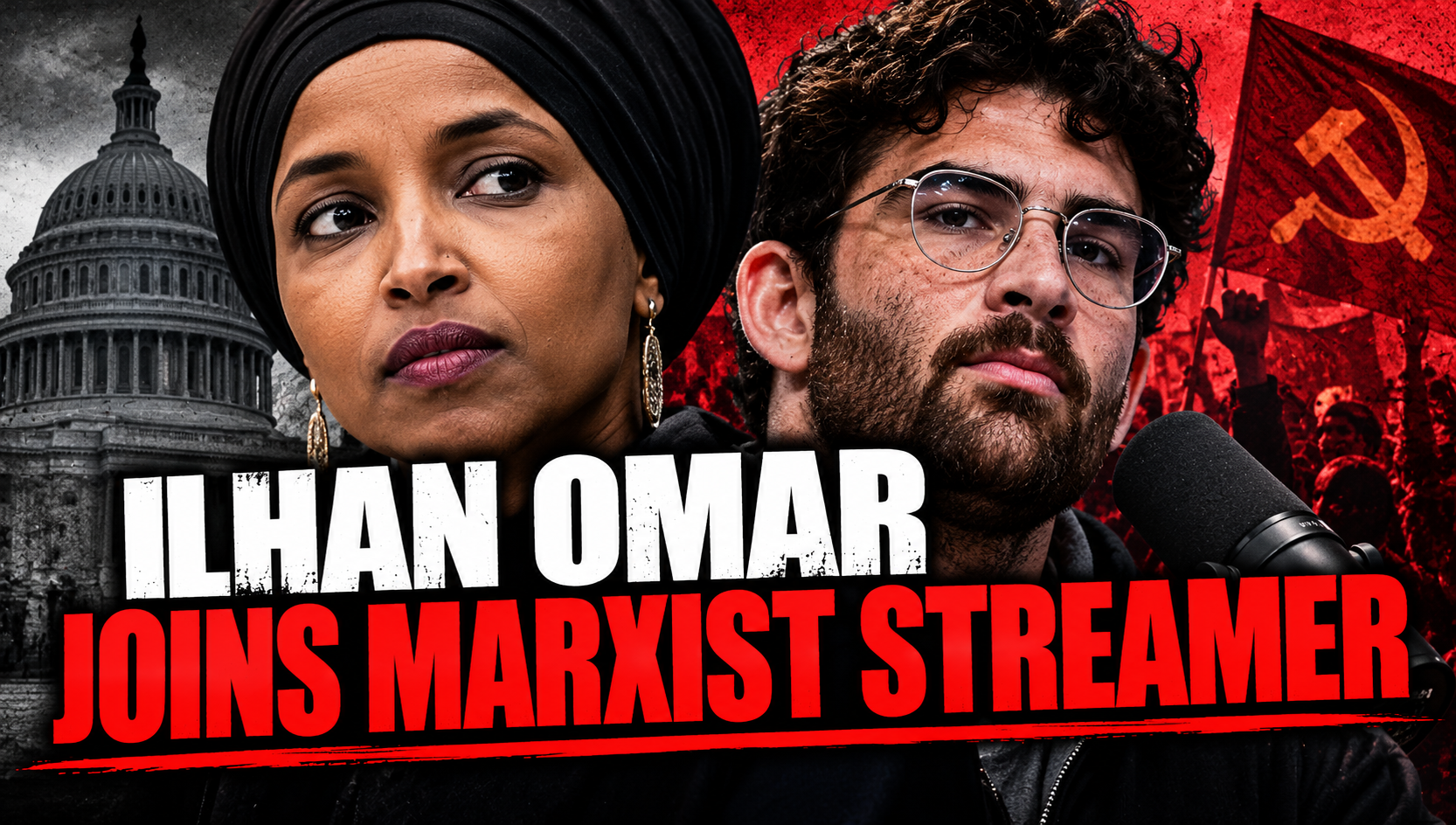
Minnesota Democrats are turning on one another over Rep. Ilhan Omar’s decision to appear alongside controversial left-wing streamer Hasan Piker, whose past remarks about 9/11, Hamas, and American politics have drawn condemnation from both parties.
With the midterm elections just days away, Rep. Ilhan Omar (D-MN) is creating a political headache for her own party.
Omar is scheduled to appear Monday at a sold-out Minneapolis event featuring socialist state Sen. Omar Fateh and Hasan Piker, the popular left-wing streamer whose inflammatory political commentary has made him a celebrity among younger progressives.
The event has exposed a growing divide among Minnesota Democrats, some of whom fear that embracing Piker could alienate moderate voters at precisely the wrong moment.
Rep. Angie Craig (D-MN) has described Piker’s rhetoric as “polarizing and dangerous,” calling the decision to embrace him “a mistake.” Sen. Amy Klobuchar’s gubernatorial campaign has similarly condemned several of his past statements as “reckless and unacceptable,” according to Fox News.
Other Democratic officials have called for the event to be canceled altogether.
Piker, who commands a substantial online following, has repeatedly attracted controversy for remarks about terrorism, Israel, and American foreign policy.
Among his most notorious statements was his 2019 declaration that America “deserved 9/11,” a comment he later said was poorly expressed. He has also faced criticism for statements about Hamas and for describing the Republican Party as the world’s largest terrorist organization.
For Republicans, Omar’s willingness to share a platform with Piker offers another opportunity to portray the Democratic Party as increasingly beholden to its radical left wing.
House Majority Whip Tom Emmer (R-MN), joined by Minnesota’s Republican congressional delegation, issued a statement Friday condemning the event.
“Antisemitism, hatred, and the glorification of terrorism and political violence have no place in Minnesota or anywhere in the United States,” the lawmakers said.
They argued that Piker’s previous statements should disqualify him from appearing alongside elected officials and called on Minnesota Democrats to reject his rhetoric.
But the controversy presents a more complicated problem for Democrats than simply distancing themselves from an unpopular commentator.
Piker’s audience represents precisely the younger, politically engaged voters whom progressive candidates hope to mobilize. His popularity illustrates the growing influence of online political personalities who operate outside traditional party institutions and have little incentive to moderate their views for a general-election audience.
That influence comes with a political cost.
University of Minnesota political science professor Larry Jacobs told FOX 9 that the appearance could divide the state’s Democratic-Farmer-Labor Party and distract candidates from their closing election message, particularly among moderate and Jewish voters.
The dispute also highlights the ideological differences between Omar and more establishment-oriented Minnesota Democrats.
Omar has long been among the party’s most outspoken progressive figures, particularly on Israel and American foreign policy. Fateh, a self-described democratic socialist, has similarly aligned himself with the party’s activist wing.
Their decision to appear with Piker suggests that at least some Democrats believe the political benefits of reaching his audience outweigh the controversy surrounding his statements.
For more moderate members of the party, that calculation is considerably less appealing.
The timing could hardly be worse. With voters preparing to head to the polls, Minnesota Democrats now find themselves publicly debating whether one of the country’s most controversial political streamers should be welcomed into their campaign events.
Republicans, meanwhile, have made clear that they intend to use the appearance to challenge Democrats over political extremism and antisemitism.
The larger question is whether Piker’s popularity represents an emerging direction for the Democratic Party or a faction whose influence remains concentrated among younger progressive voters.
For Omar and Fateh, the answer appears to be worth testing.
For their Democratic colleagues facing competitive elections, it may be a gamble they would rather not take.