

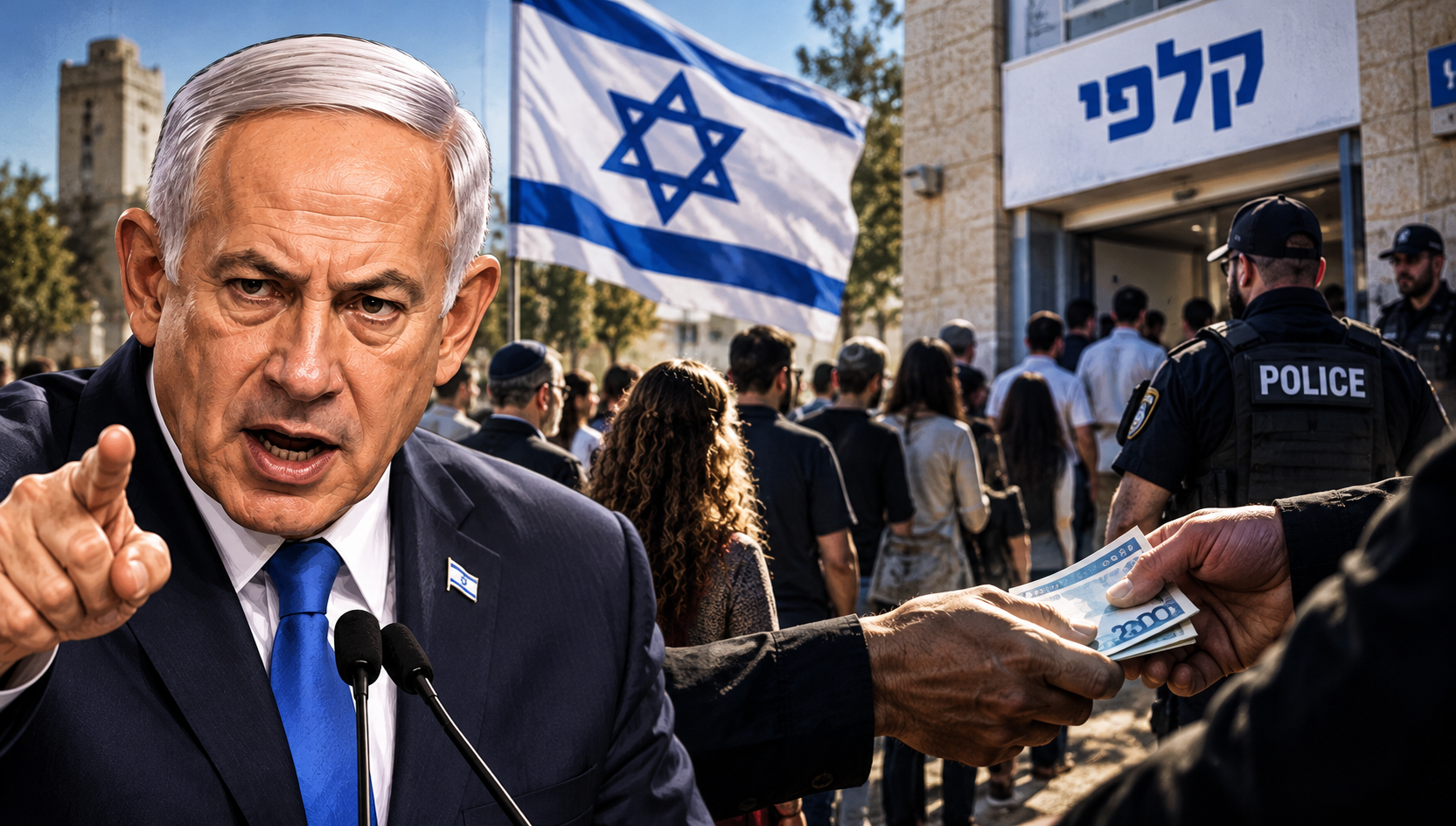
Arrests over suspected voter bribery, surging turnout, and a frantic last-minute mobilization have thrown Israel’s closely contested election into turmoil.
Israeli Prime Minister Benjamin Netanyahu is sounding the alarm over possible election interference as Israelis head to the polls in numbers not seen before.
With his political future hanging in the balance, Netanyahu accused opponents of attempting to steal Tuesday’s national election after three individuals reportedly associated with the Arab Ra’am party were arrested on suspicion of bribing voters in southern Israel.
“They are trying to steal the election from us,” Netanyahu warned.
Ra’am denied wrongdoing, and the arrests do not establish that any broader election-rigging operation occurred. Nevertheless, the allegations have injected fresh controversy into an already explosive election.
Record Turnout Sends Netanyahu’s Coalition Scrambling
By 6 p.m. Tuesday, voter turnout had reached 66.7 percent, according to Israel’s Central Elections Committee. That compares with just 57.7 percent at the same point in the 2022 election.
It was the highest turnout ever recorded at that hour in an Israeli national election.
But record participation does not necessarily mean good news for Netanyahu.
Reports of unusually strong turnout in Arab communities and left-wing strongholds sent alarm bells ringing throughout his governing coalition.
With only hours remaining before polls closed, Netanyahu and Finance Minister Bezalel Smotrich launched an emergency effort to get conservative voters to polling stations.
Smotrich’s Religious Zionism party reportedly organized dozens of local officials to help mobilize supporters.
National Security Minister Itamar Ben Gvir personally knocked on doors in Bat Yam, urging residents to vote. Meanwhile, Netanyahu’s Likud party deployed hundreds of volunteers to canvass neighborhoods in Lod.
Foreign Minister Gideon Sa’ar delivered a particularly stark warning:
“This day will determine the existence of the Jewish state.”
The message was unmistakable. Netanyahu’s allies believe the stakes extend far beyond another election cycle.
A Few Votes Could Change Everything
Israel’s parliamentary system makes elections especially unpredictable.
Unlike the United States, where voters choose a president separately from Congress, Israelis elect parties to the 120-seat Knesset. Those parties must then assemble a governing coalition capable of commanding at least 61 seats.
And there is another complication.
Parties must receive at least 3.25 percent of the national vote to enter parliament.
That means thousands of votes could determine whether a smaller right-wing party enters the Knesset or disappears from parliamentary representation entirely.
A party falling just short of the threshold could cost Netanyahu’s coalition several crucial seats.
Final pre-election polling suggested neither Netanyahu’s bloc nor its opponents had secured a clear path to a parliamentary majority.
In other words, the election could be decided not simply by which side receives more votes, but by which smaller parties survive.
Election Integrity Becomes the Final Battleground
As the evening progressed, Likud and several allied parties petitioned the Central Elections Committee to extend voting beyond the scheduled 10 p.m. closing time.
Opposition leader Gadi Eisenkot’s Yashar party objected, accusing Netanyahu of preparing to challenge the election’s legitimacy.
Election officials had already clarified that anyone waiting in line when polls closed would still be allowed to vote.
The dispute illustrates the deep distrust separating Israel’s political factions.
Netanyahu’s supporters point to the suspected bribery investigation as a reason for heightened scrutiny. His opponents argue that the prime minister is using isolated allegations to cast doubt on an election whose outcome remains uncertain.
Neither argument changes the central fact: allegations of wrongdoing require evidence, and a criminal investigation involving three suspects is not proof of a stolen national election.
Israel Faces a Political Reckoning
For Netanyahu, this election represents another battle for political survival.
For Israel, the consequences could extend to national security, relations with Washington, the future of its governing coalition, and the country’s broader political direction.
The unprecedented turnout suggests an electorate intensely engaged in deciding that future.
But high participation alone cannot tell either side whether victory is coming.
As voting enters its final hours, Israel faces a familiar political reality with unusually high stakes: a deeply divided country, competing claims about election integrity, and a parliamentary system in which a handful of seats can change everything.
The votes will determine who governs Israel. Whether the losing side accepts the outcome may prove to be another battle entirely.