

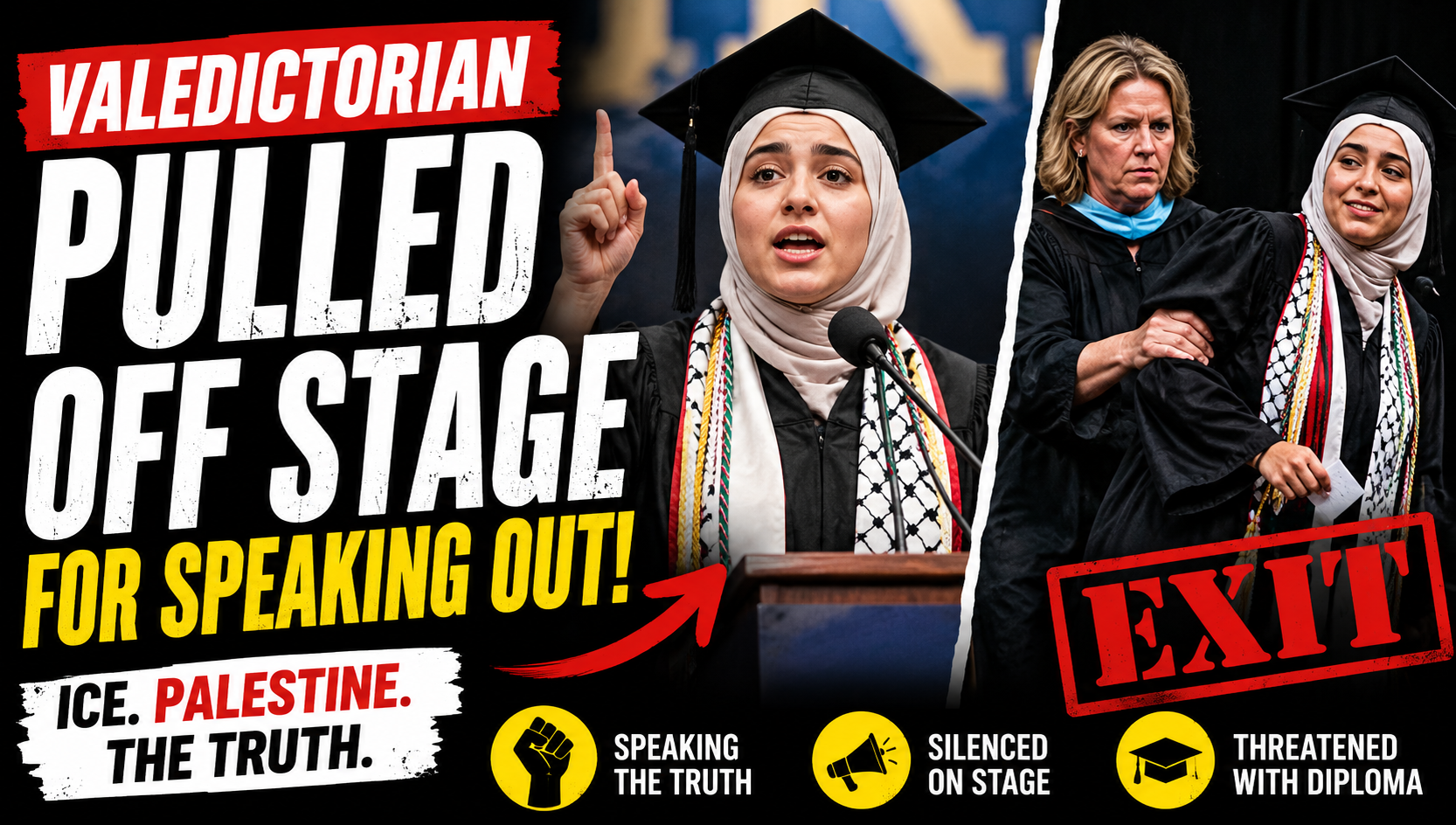
What was supposed to be a celebration of academic achievement turned into a national controversy after a North Carolina valedictorian was removed from the stage for abandoning her approved graduation speech and launching into a political statement about Palestine, immigration enforcement, and global conflicts.
Leen Hijaz, a graduating senior at Clayton High School, surprised school officials during Thursday’s commencement ceremony when she shifted away from her pre-approved remarks and began discussing international conflicts and Immigration and Customs Enforcement (ICE).
“Before I leave the stage, I have one last thing to say,” Hijaz told the audience before launching into comments about Palestine, Sudan, Congo, Afghanistan, and families affected by ICE enforcement actions.
Principal Steps In
Video from the ceremony shows Principal Melissa Moore approaching Hijaz on stage and escorting her away as the speech continued.
The moment quickly spread across social media, where supporters praised Hijaz for speaking out while critics argued she violated clear rules governing the event.
Hijaz smiled and waved to the audience as she left the stage before returning to her seat.
The incident immediately sparked debate over free speech, school authority, and whether graduation ceremonies should be used as platforms for political activism.
School Says It Was About Following the Rules
After the controversy exploded online, Johnston County Public Schools defended its decision.
School officials stated that Hijaz had departed from her approved remarks and that administrators intervened to preserve the purpose of the ceremony.
“This action was not about limiting a student’s voice, but about ensuring that a school-sponsored event remained consistent with its intended purpose,” the district said.
The district emphasized that graduation speeches are reviewed beforehand and that students are expected to deliver the approved version during the ceremony.
Claims of Diploma Threats
Following the incident, Hijaz told local media that school officials threatened to withhold her diploma after the speech.
She described the experience as oppressive and argued that she was punished for raising awareness about issues she believes deserve attention.
According to reports, school officials later confirmed that she received her diploma.
That confirmation undercut some of the more dramatic claims circulating online that she would be prevented from graduating.
Free Speech or Breaking an Agreement?
The controversy highlights a recurring question facing schools across America: does free speech protect students from consequences when they disregard agreed-upon rules at official events?
Supporters argue that graduation ceremonies provide a rare opportunity for students to address large audiences and raise awareness about important issues.
Critics counter that commencement ceremonies are not open-mic events. They point out that speakers are selected based on the understanding that they will deliver the remarks that were approved in advance.
The dispute is less about the specific political views expressed and more about whether students should be allowed to use school-sponsored platforms to deliver unsanctioned political messages.
A Growing Trend
The Clayton High School incident is the latest example of graduation ceremonies becoming battlegrounds for political activism.
Across the country, commencement speeches have increasingly featured discussions about race, immigration, foreign policy, climate change, and other controversial topics.
For many Americans, the question isn’t whether students have the right to hold political opinions.
It’s whether a graduation ceremony is the place to make those statements after agreeing to a different speech.
In Clayton, school officials made their answer clear the moment they walked onto the stage.