

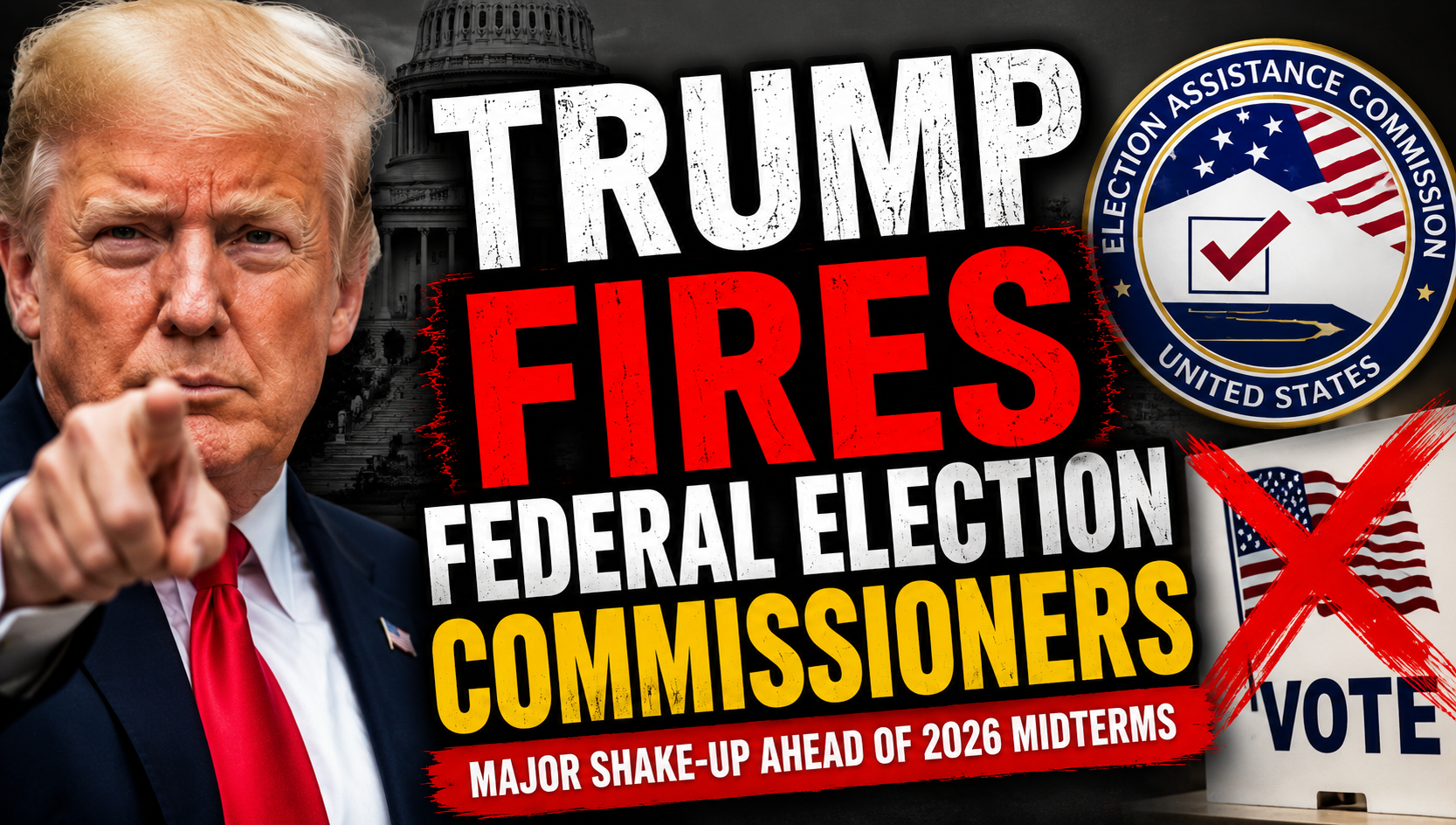
President Donald Trump has removed members of the bipartisan federal commission that helps oversee America’s election system, marking another major step in his effort to reshape how federal elections are administered.
The White House confirmed Friday that Trump dismissed the two Democratic members of the U.S. Election Assistance Commission (EAC), Thomas Hicks and Benjamin Hovland. The commission’s remaining Republican member, Christy McCormick, has resigned, leaving the agency without a quorum just months before preparations for the 2026 midterm elections intensify.
The administration said the president has the authority to remove officials who are not aligned with his election security agenda, citing a recent Supreme Court decision expanding presidential authority over certain independent agencies.
“The President… reserves the right to remove individuals that may not be totally aligned with the important task of securing America’s elections and ensuring every legal vote is counted,” the White House said in a statement.
The move follows a months-long dispute over Trump’s March 2025 executive order directing federal officials to require proof of U.S. citizenship when registering to vote using the national voter registration form. The Election Assistance Commission previously declined to implement the change, and a federal judge later blocked the executive order, ruling that election administration powers belong primarily to Congress and the states. The Trump administration has appealed that decision.
Created by the Help America Vote Act of 2002, the Election Assistance Commission distributes federal grants to state election offices, develops voting system guidelines, certifies voting equipment, and maintains the federal voter registration form. By law, the commission consists of two Republicans and two Democrats confirmed by the Senate.
With all four seats now vacant, it remains unclear whether Trump will quickly nominate replacements or leave the commission inactive. Without a functioning quorum, the agency’s ability to approve grants, certify voting systems, and carry out other statutory responsibilities could be significantly limited ahead of the next federal election cycle.
Supporters of the administration argue the changes are part of a broader effort to strengthen election integrity and ensure that only eligible citizens cast ballots. Critics contend the dismissals could inject greater political influence into an agency designed to operate on a bipartisan basis.
The shake-up represents one of the most significant changes to the federal government’s election oversight structure since the commission was established more than two decades ago.