

You wake up, check the headlines, scroll for a few minutes, and feel like you’ve got a handle on the world.
But what if that “snapshot” isn’t the world at all?
What if it’s curated—tilted—filtered in ways you never see?
A new analysis from AllSides is raising exactly that question, and the numbers are hard to ignore.
The Feed Isn’t Balanced
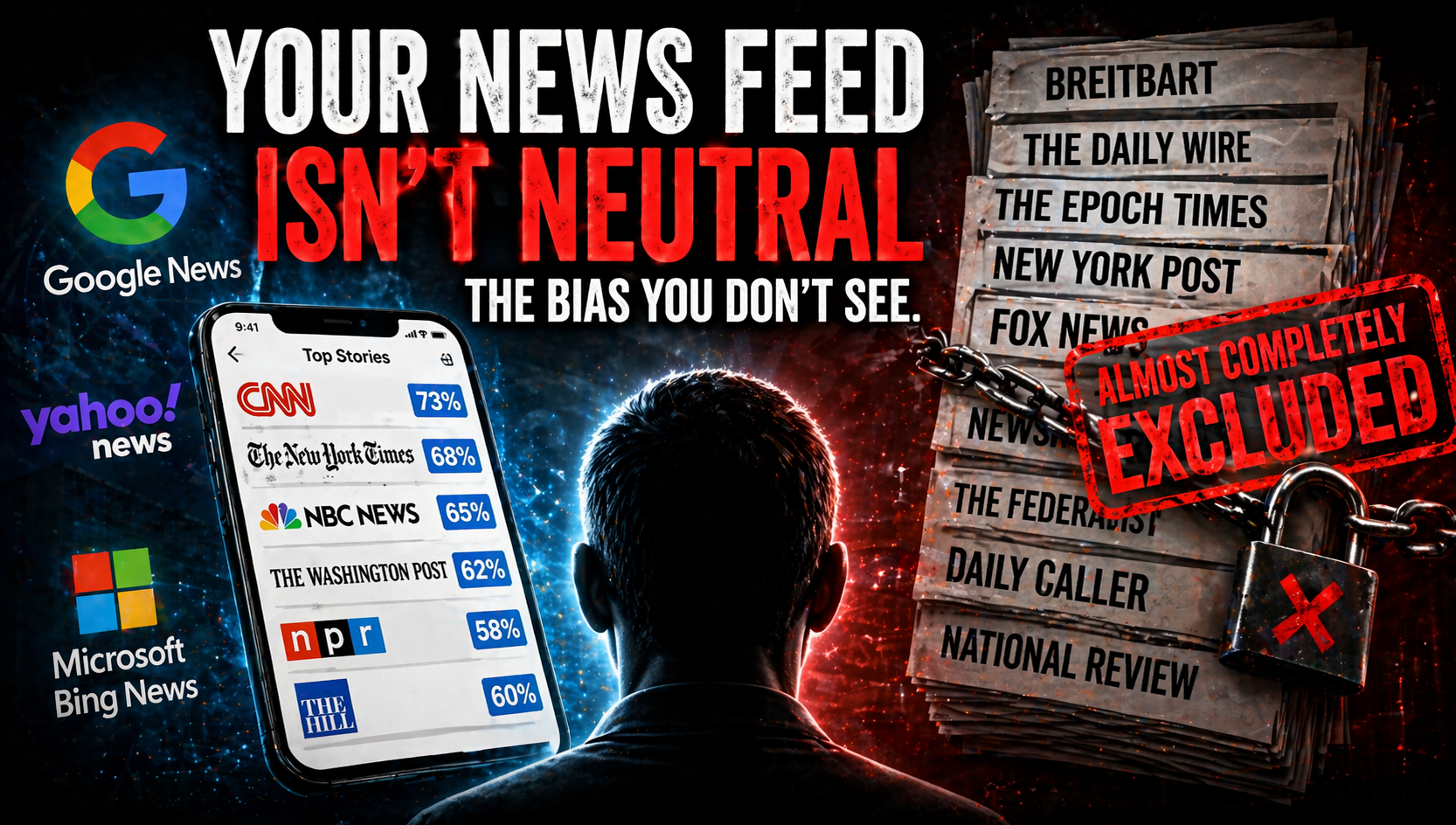
According to the study, major platforms like Google News, Yahoo News, and Microsoft Bing News overwhelmingly feature content from left-leaning outlets—while right-leaning sources barely register.
The breakdown is stark:
- Google News: 1% right-leaning vs. 73% left-leaning
- Yahoo News: 2% right vs. 53% left
- Bing News: 5% right vs. 72% left
Even Apple News, which has faced criticism before, showed similar patterns.
That’s not a slight tilt.
That’s a landslide.
This Isn’t Just About Politics
Half of Americans now get their news from these platforms.
That means what shows up—and what doesn’t—shapes how millions of people understand reality itself.
Not just opinions.
Reality.
Julie Mastrine of AllSides put it bluntly: when platforms fail to present multiple viewpoints, they don’t just inform—they limit independent thinking.
And that’s where this moves from media criticism into something bigger.
The Power You Don’t See
These platforms don’t feel like gatekeepers.
They feel like tools.
You search. You scroll. You click.
But behind the scenes, decisions are being made—by algorithms, editors, or a mix of both—about what deserves attention.
And those decisions carry weight.
Because if one side of an issue is consistently underrepresented, it doesn’t just lose visibility.
It starts to disappear from the conversation altogether.
“It’s Just the Algorithm”… Or Is It?
Tech companies push back on studies like this.
They argue that feeds are personalized, that snapshots are limited, that methodology matters.
And sure—there’s truth there.
But here’s the real question:
If personalization is the defense, why do the results look so consistent across platforms?
Different companies. Different systems.
Same outcome.
At some point, coincidence stops being convincing.
Washington Is Starting to Notice
This isn’t just an online debate anymore.
Andrew Ferguson has already signaled concern, launching inquiries into whether tech companies may be suppressing certain viewpoints in ways that could violate consumer protection laws.
That’s a big shift.
Because it reframes the issue from bias… to accountability.
The Bigger Picture
This isn’t about demanding equal time for every opinion.
It’s about transparency.
If platforms are shaping the national conversation—and they are—then users deserve to know how and why.
Right now, most people assume they’re seeing “the news.”
What they may actually be seeing is a version of the news—filtered through systems they don’t control and rarely question.
The Quiet Reality
No one is forcing anyone to read anything.
But if entire perspectives are quietly minimized, the effect is the same.
You don’t argue with ideas you never encounter.
You don’t question narratives you never hear challenged.
And over time, that doesn’t just influence opinions.
It reshapes the boundaries of what people think is even up for debate.
That’s the real story here.
Not just bias.
But influence—at scale, in silence, every single day.