

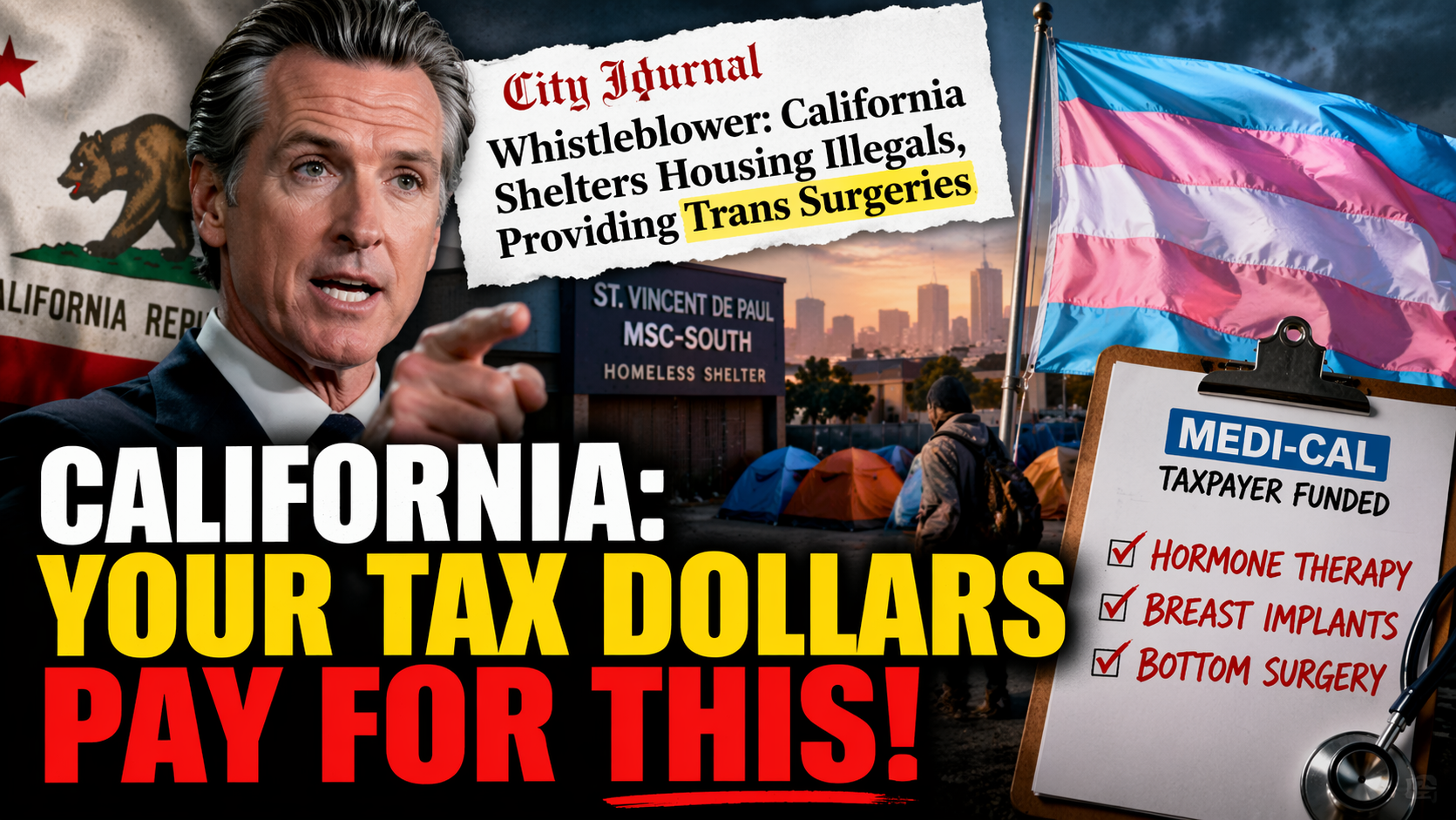
A new report out of San Francisco is igniting a fresh round of debate over how taxpayer dollars are being spent in one of the country’s most politically influential states.
At the center of the controversy: allegations that individuals in homeless shelters—including non-citizens—have received taxpayer-funded transgender medical treatments through California’s public healthcare system.
What the Report Claims
According to reporting highlighted by journalists including Christopher Rufo and Jonathan Choe, investigators visited multiple shelters in San Francisco and spoke with residents who described receiving medical services under the state’s Medi-Cal program.
One facility, reportedly operating under a multimillion-dollar city contract, was said to house undocumented individuals, some of whom identified as transgender and claimed access to hormone therapy and, in at least one case, surgical procedures.
California’s Medi-Cal system has, in recent years, expanded coverage to include what the state classifies as medically necessary gender-affirming care—policies supported by lawmakers and defended as part of broader healthcare equity efforts.
The Policy Behind It
Under California law, Medi-Cal can cover treatments deemed medically necessary, including gender-related care, for qualifying recipients. Supporters argue that such policies reflect modern medical standards and ensure vulnerable populations receive appropriate care.
Critics, however, see it differently.
They point to the scale of spending and question whether extending these benefits to non-citizens—particularly those in emergency housing—reflects responsible prioritization of public funds.
Estimates cited in public discussions suggest California spends billions annually on healthcare for non-citizens, with expanded eligibility continuing to be debated in the state legislature.
A Broader Debate Over Priorities
The controversy taps into a much larger national conversation:
- How should states allocate limited public resources?
- What obligations exist toward non-citizens receiving state services?
- Where should healthcare priorities fall in times of economic strain?
California, led by Gavin Newsom, has positioned itself at the forefront of expansive healthcare policy—often clashing with more restrictive approaches at the federal level.
Political Tensions Rising
The issue also intersects with ongoing federal-state tensions over immigration policy.
While Donald Trump has emphasized enforcement and deportation efforts, California leaders have taken a more protective stance toward undocumented populations, including expanding access to services.
That divide is now playing out not just at the border—but in state budgets, healthcare systems, and local communities.
What Comes Next
At this stage, the claims outlined in the report are fueling political scrutiny and public debate, but they also highlight how complex—and contentious—state-level healthcare policy has become.
Whether this leads to policy changes, investigations, or simply more polarization remains to be seen.
But one thing is clear:
California’s approach to healthcare, immigration, and public spending is once again under the national spotlight—and the conversation is far from over.