

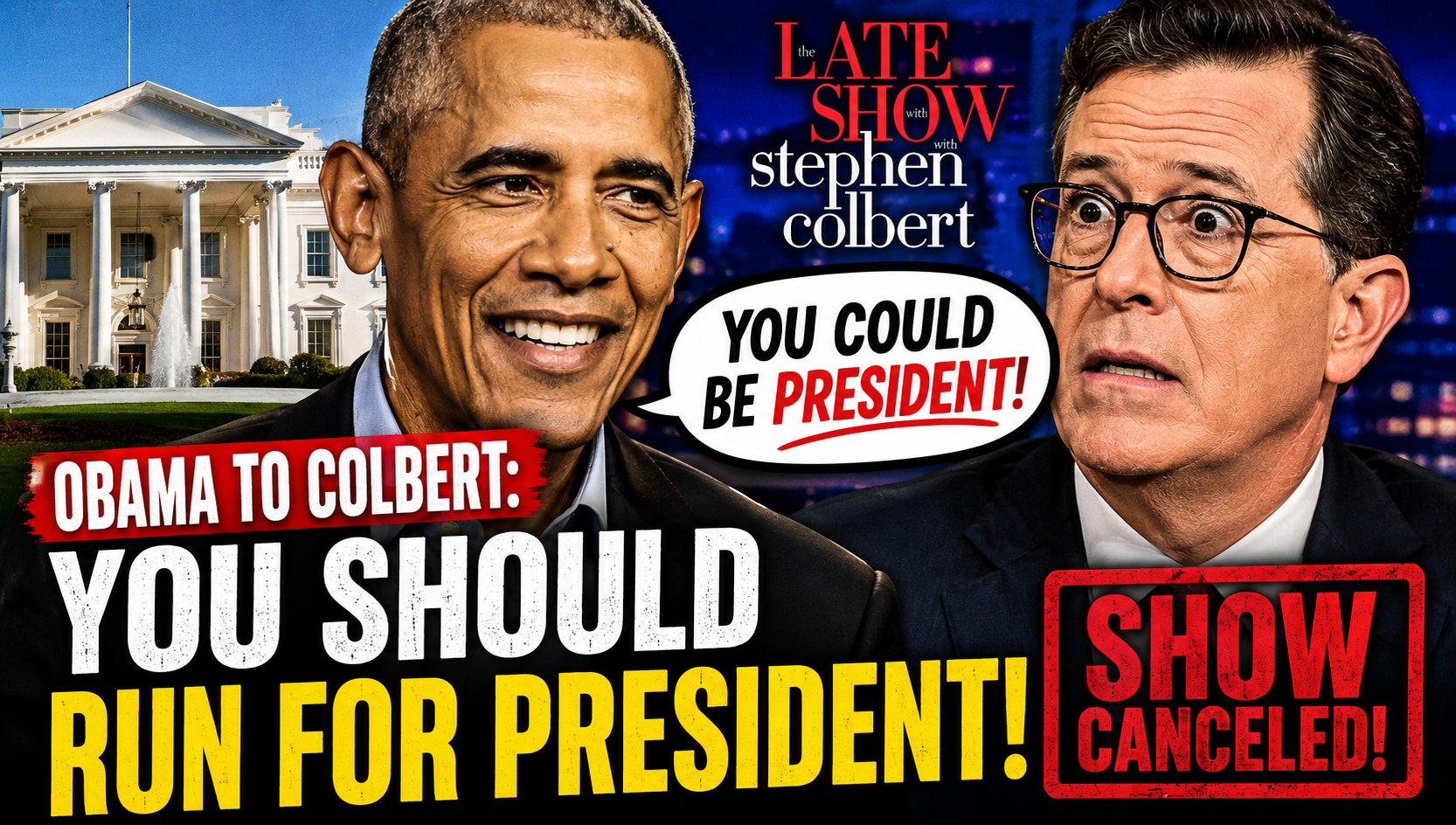
Former President Barack Obama appeared to take a swipe at America’s political landscape this week when he suggested outgoing late-night host Stephen Colbert could potentially run for president.
The moment came during Obama’s appearance on The Late Show, where Colbert—whose program is already set for cancellation—asked Obama about growing calls from fans encouraging him to enter politics.
“A lot of people tell me I should run for president,” Colbert said.
Obama responded with a grin:
“Well, the bar has changed.”
The audience erupted into applause as Obama continued:
“I think that you could perform significantly better than some folks we’ve seen.”
The exchange was widely interpreted as a jab at President Donald Trump, continuing the years-long pattern of late-night television serving as an unofficial arm of anti-Trump political commentary.
But beyond the jokes and canned applause, critics argued the interview revealed something deeper: the increasingly blurred line between entertainment, political activism, and media power.
Colbert’s show, once marketed as comedy, has become openly political in recent years, with monologues frequently focused on attacking conservatives, mocking Trump supporters, and promoting Democrat talking points. While loyal left-wing audiences embraced the format, ratings reportedly declined sharply as mainstream viewers abandoned partisan late-night television altogether.
CBS ultimately canceled the struggling program after reports surfaced that the show was hemorrhaging tens of millions of dollars annually.
Even some critics of Obama acknowledged the striking contrast between the two men during the interview. Obama, despite being out of office for years, still commands attention with a polished, charismatic stage presence. Colbert, meanwhile, often appeared awkward and overly eager for validation, reinforcing criticism that his political identity eventually consumed the comedic persona that originally made him successful.
Obama also used the interview to lecture about presidential “norms,” specifically arguing that presidents should not influence Justice Department prosecutions.
That comment immediately triggered backlash from critics who pointed to years of controversy surrounding the Russia collusion investigation, surveillance allegations against the Trump campaign, and accusations that intelligence agencies were weaponized during and after Obama’s presidency.
For many conservatives, Obama’s remarks about protecting democratic norms rang hollow given the bitter political warfare that defined the years surrounding Trump’s first term.
The interview also conveniently doubled as promotion for Obama’s newly opened presidential library in Chicago, leading some observers to accuse CBS and Obama of engaging in a mutually beneficial media arrangement: Colbert received a high-profile guest to boost attention ahead of his show’s cancellation, while Obama received a nationally televised promotional segment for his presidential center.
Colbert’s final episode is scheduled for May 21, closing the curtain on a late-night era that increasingly prioritized political messaging over comedy.
Whether Americans will miss it depends largely on whether they tuned in for laughs—or lectures.