

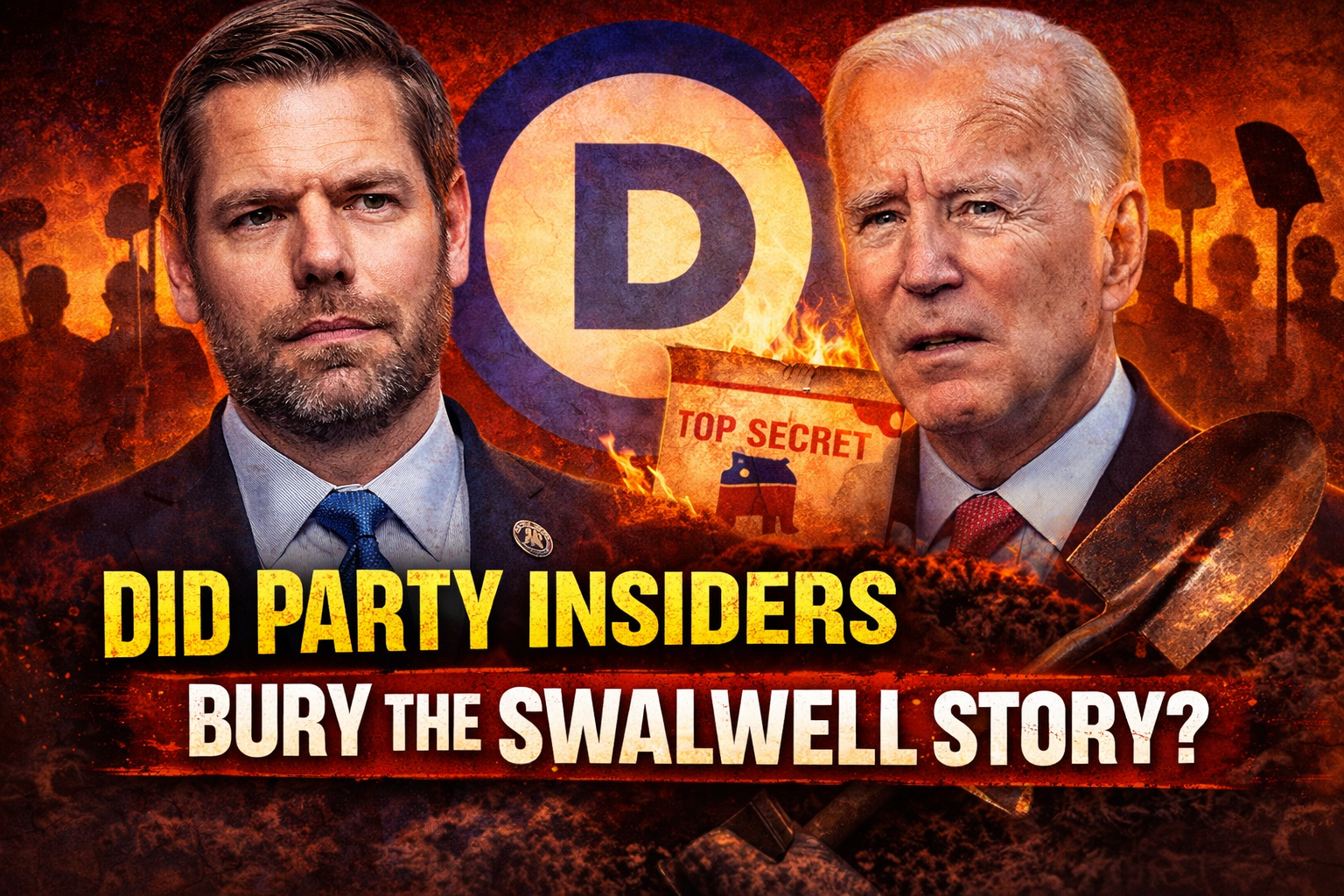
The story had been circulating for months.
That’s the claim made Tuesday by Steve Hilton during an appearance on The Alex Marlow Show, where he addressed the growing controversy surrounding Eric Swalwell.
According to Hilton, whispers about the situation weren’t new. They had been moving quietly through political and media circles long before the story reached public view.
“So, we had heard all of this months ago,” Hilton said, pointing to conversations among reporters and individuals connected to California’s Democratic political network.
The Lag Between Rumor and Headline
Hilton’s comments tap into a familiar dynamic in politics: the gap between what insiders hear and what the public eventually sees.
In major political controversies, especially those involving high-profile figures like Swalwell, information often circulates behind closed doors first. Staffers talk. Reporters investigate. Operatives weigh the political cost of exposure.
But nothing becomes “real” until it breaks into the open.
That delay raises obvious questions:
- Who knew what, and when?
- Why did the story surface now?
- And what changed between the quiet whispers and the public fallout?
Hilton’s framing suggests that this wasn’t a sudden revelation, but rather a controlled release—something that had been known, discussed, and perhaps even managed before reaching voters.
California’s Political Machine Under Scrutiny
By referencing “people connected to the Democratic machine in California,” Hilton is pointing toward a broader critique—one that goes beyond any single controversy.
California politics, particularly at the state level, operates within a tightly networked ecosystem of consultants, donors, media figures, and party officials. In such an environment, information rarely moves randomly. Timing matters. Strategy matters.
For critics, that raises concerns about transparency.
If allegations or damaging information about a public official are known internally but withheld from voters, it feeds the perception that political insiders play by a different set of rules than the public.
Supporters, however, might argue that unverified claims should not be rushed into the spotlight without proper investigation—especially in an era where misinformation spreads quickly.
The Swalwell Factor
Eric Swalwell is no stranger to controversy or national attention. A frequent media presence and outspoken political figure, he has long been a lightning rod for criticism from opponents and a reliable voice for his allies.
That visibility makes any allegation—whether proven, disputed, or still unfolding—far more impactful.
It also raises the stakes for how and when such stories emerge.
Politics, Perception, and Power
Hilton’s remarks ultimately land on a deeper issue: trust.
When political stories appear to break suddenly, after months of quiet circulation among insiders, it can create a sense that the public is always a step behind—that decisions are being shaped before voters even know the full picture.
Whether that perception is accurate or not, it has real consequences.
Because in politics, timing isn’t just everything.
It’s the story.