
Something doesn’t quite add up.
On Tuesday’s episode of The Alex Marlow Show, Alex Marlow raised eyebrows over what he described as a sudden shift involving the Vatican, U.S. politics, and a familiar name from the Obama era.
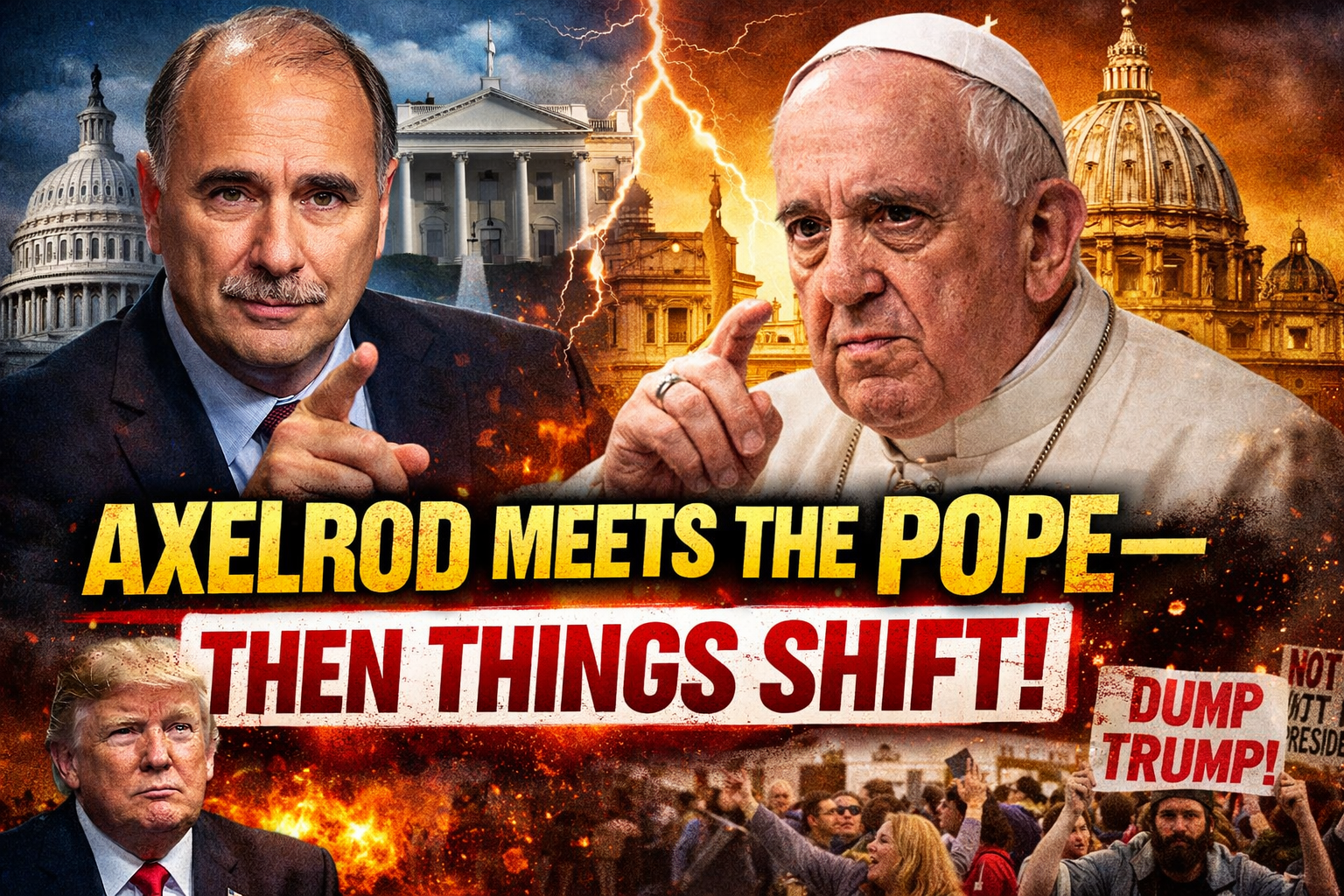
At the center of the discussion is David Axelrod, the longtime strategist behind Barack Obama. According to Marlow, Axelrod recently met with Pope Francis at the Vatican. What followed, he suggested, was a rapid emergence of messaging that appeared critical of Donald Trump—particularly within Catholic circles.
Marlow framed the timing as more than coincidence.
“I’m trying to track what was going on with this campaign to take down Trump with the Catholics,” he said, pointing to the sequence of events: a high-level political meeting, followed shortly by public statements from the Pope that entered politically sensitive territory.
A Familiar Fault Line
The intersection of faith and politics is nothing new, especially in American elections. Catholic voters have long been seen as a pivotal bloc—historically swing-oriented, culturally influential, and often divided on key issues like immigration, abortion, and economic policy.
But what makes this moment different, according to Marlow, is the implication of coordination—or at least alignment—between political operatives and religious leadership.
That’s a serious charge.
And it raises bigger questions:
- Are religious institutions being drawn into partisan battles more directly than before?
- Or are political commentators reading intent into what may simply be independent moral commentary from church leaders?
Optics vs. Intent
It’s worth noting that Pope Francis has not been shy about weighing in on global political issues. From climate change to migration, his public statements often carry moral framing that can overlap with political debates.
But whether those remarks are the result of external influence—or simply consistent with his long-standing positions—is a matter of interpretation.
Marlow’s commentary reflects a broader skepticism shared by some observers who see growing entanglement between political strategy and cultural institutions.
Others would argue the opposite: that religious leaders have every right—perhaps even a responsibility—to speak into moral questions, regardless of how those statements are received politically.
Why This Matters
At stake here is more than just a headline or a podcast clip.
If voters begin to believe that religious authority is being leveraged as a political tool, it could deepen distrust—not just in politics, but in institutions that traditionally operate outside of it.
On the other hand, if these concerns are overstated, they risk fueling unnecessary division by casting suspicion where none exists.
Either way, the conversation isn’t going away.
Because when politics enters the sanctuary—or is perceived to—people notice.