

For years, health advocates have pushed food manufacturers to remove artificial dyes from America’s favorite snacks. Now, as the Make America Healthy Again movement gains momentum, one of the most recognizable candy brands in the world is discovering that replacing synthetic ingredients is easier said than done.
Mars, the maker of M&M’s, is preparing to launch a version of its iconic candy made without artificial dyes. The effort aligns with the broader push championed by President Donald Trump and Health and Human Services Secretary Robert F. Kennedy Jr. to reduce artificial additives in the American food supply.
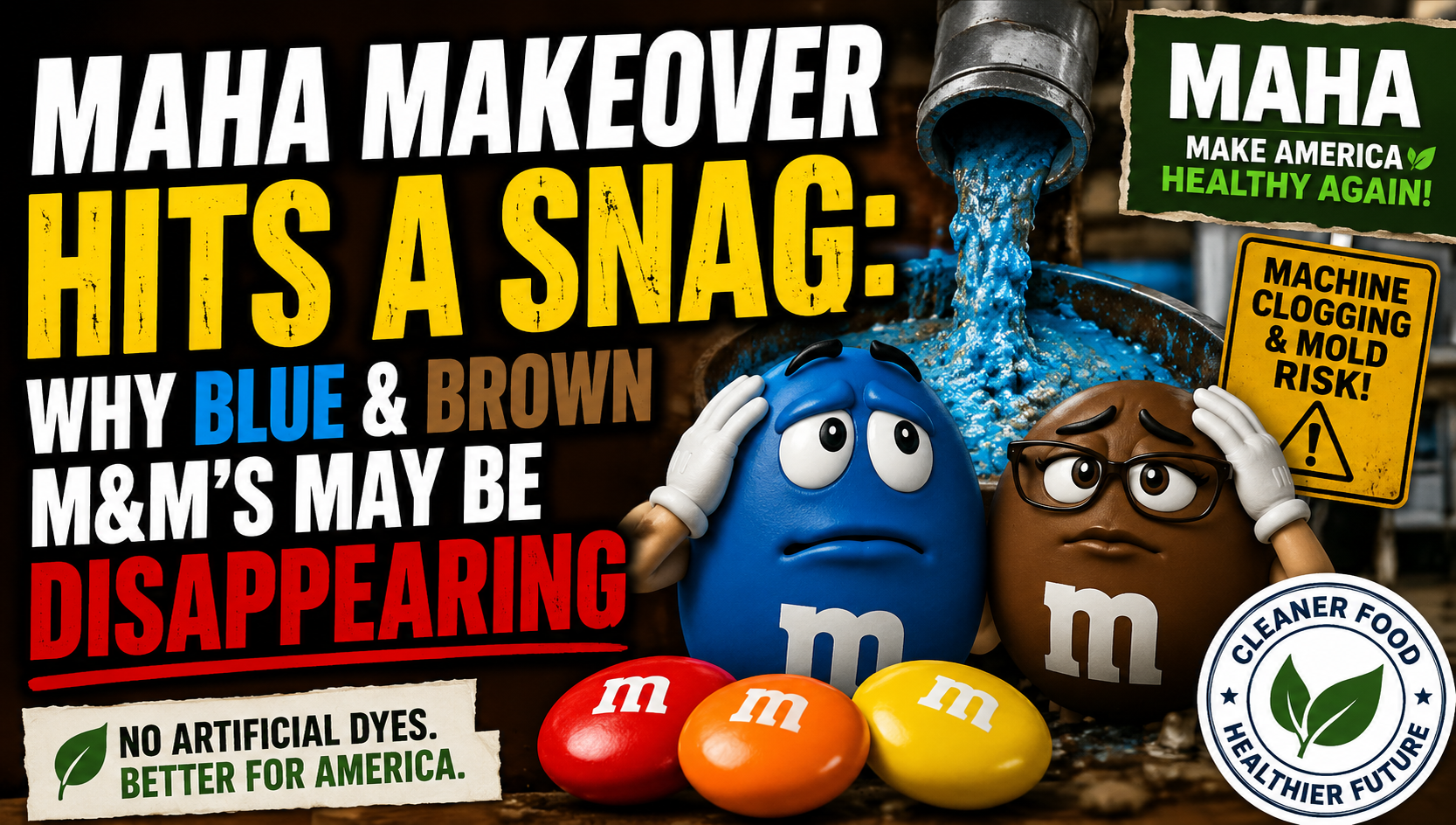
There is just one problem: nobody can seem to figure out how to make the blue M&M.
According to reports, Mars has successfully developed natural versions of its red, orange, and yellow candies. The company planned to replace synthetic coloring with natural alternatives such as spirulina, an algae-derived pigment often used in food products. But when it came to producing the familiar blue shell, the solution created a manufacturing nightmare.
Engineers reportedly found that achieving the bright blue color required roughly seven times more pigment than artificial dyes. The resulting mixture became thick, foamy, and difficult to process. Even worse, the residue reportedly accumulated in factory equipment, increasing maintenance problems and raising concerns about mold growth and food safety.
The challenge extends beyond the blue candies themselves. Brown M&M’s also depend heavily on blue pigments to achieve their signature appearance. Without a reliable natural blue coloring, both colors may temporarily disappear from the lineup when the new version launches.
The controversy highlights a larger debate unfolding across the food industry. Artificial food dyes have long been approved by the FDA and remain widely used in thousands of products. However, critics point to studies suggesting potential links between certain synthetic dyes and hyperactivity, behavioral issues in children, and other health concerns.
Supporters of reform argue that if natural alternatives are available, food manufacturers should use them. Critics counter that natural replacements are often more expensive, less stable, and can create unexpected production challenges such as those now confronting Mars.
The pressure to make the switch is growing. Secretary Kennedy recently announced that nearly 35 percent of the American food industry has committed to removing artificial dyes from products. Meanwhile, food giant Nestlé has already completed the removal of FD&C colors from its products after making the pledge last year.
For consumers, the battle over food dyes may seem trivial. After all, a blue candy is still just a candy. But for manufacturers, the struggle illustrates the complexity of reforming a food system built over decades around synthetic ingredients.
The irony is difficult to miss. Americans may soon get healthier M&M’s, but they may have to say goodbye to two of the candy’s most recognizable colors in the process.
Whether consumers embrace the change remains to be seen. One thing is certain: the road to a cleaner food supply is proving far more complicated than simply swapping one ingredient for another.