

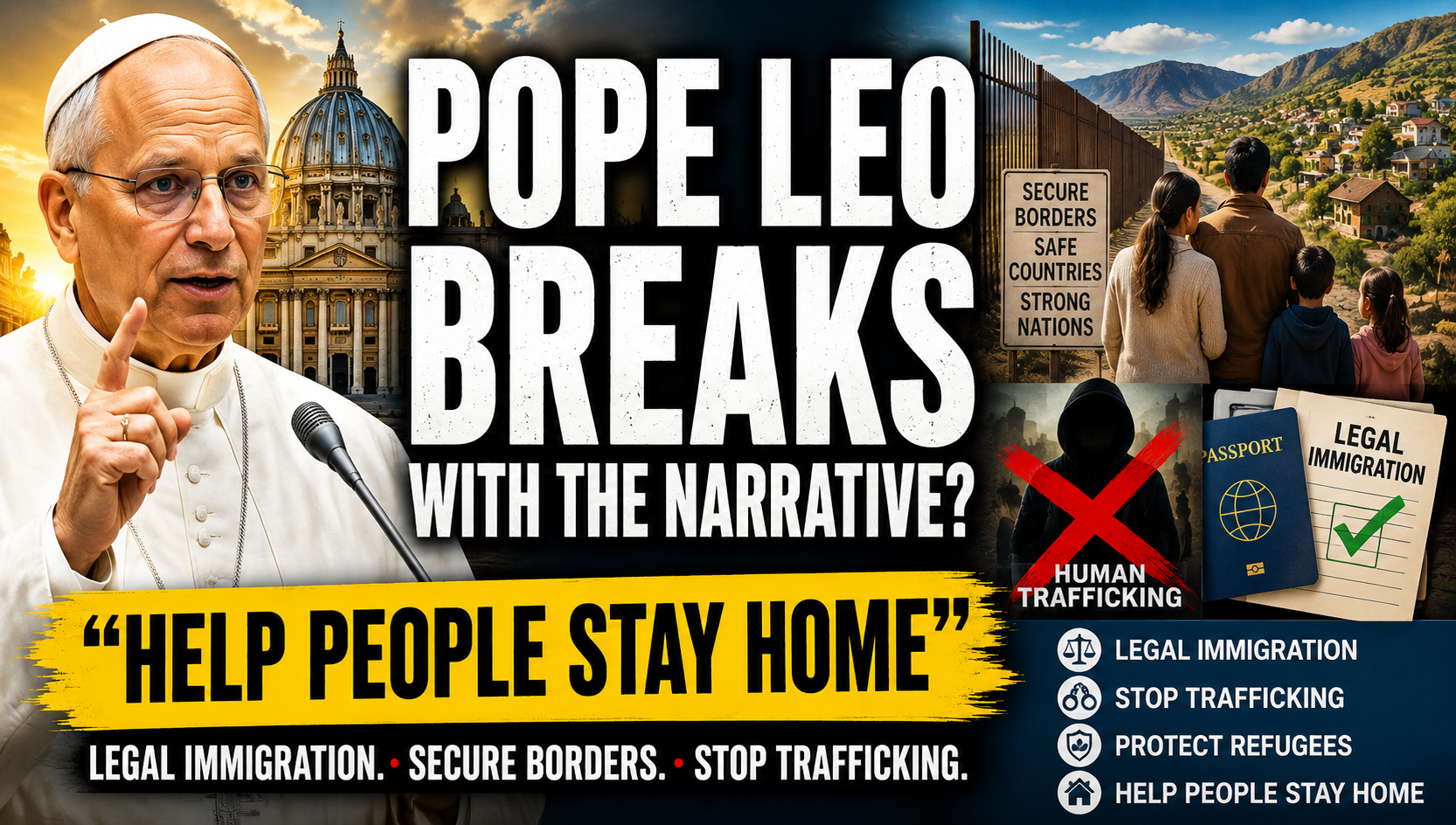
Pope Leo XIV is already generating headlines, but his latest comments on immigration are drawing attention for a different reason.
Instead of endorsing open borders or focusing exclusively on accepting migrants, the pope emphasized legal immigration, combating human trafficking, protecting refugees, and helping people remain safely in their own countries.
For many observers, the remarks sounded surprisingly close to arguments long made by immigration hawks and supporters of stronger border enforcement.
Speaking on migration and human dignity, Pope Leo said societies must provide “legal and safe routes” for migration while also pursuing “real cooperation against traffickers,” protection for victims, and policies that allow people to “live with dignity in his or her own land.”
That last point stood out.
For years, much of the immigration debate in the West has centered on how to handle large numbers of people crossing borders. Leo’s comments shifted attention to a different question: Why are so many people leaving their homelands in the first place?
The pope argued that people have a right not only to seek refuge when facing genuine danger, but also a right to remain where they were born without being driven away by war, corruption, persecution, violence, or economic collapse.
In other words, the ideal solution is not endless migration. It is creating conditions where people no longer feel compelled to leave.
That position aligns with a principle frequently voiced by President Trump and many conservatives: nations should work to address the root causes of instability rather than simply absorb the consequences after the fact.
The pope’s remarks also reinforce an important distinction often lost in modern political debates.
He spoke about those fleeing genuine threats to life and safety. He did not suggest that every economic hardship automatically creates a right to immigrate to another country. Nor did he dismiss the importance of legal processes, border security, or national sovereignty.
For supporters of controlled immigration, that language matters.
The debate has often been framed as a choice between compassion and enforcement. Leo’s comments suggest those goals are not mutually exclusive. A nation can show compassion to refugees while still maintaining laws, secure borders, and orderly immigration systems.
The pope’s broader message was that migration should not become the default answer to every crisis. People should have the opportunity to build prosperous, secure lives in their own communities whenever possible.
Whether those comments will reshape the debate remains to be seen.
But in an era when immigration discussions often devolve into slogans and accusations, Pope Leo XIV’s emphasis on legal pathways, national stability, anti-trafficking efforts, and the right of people to remain in their own homeland offers a perspective that may resonate far beyond the walls of the Vatican.