

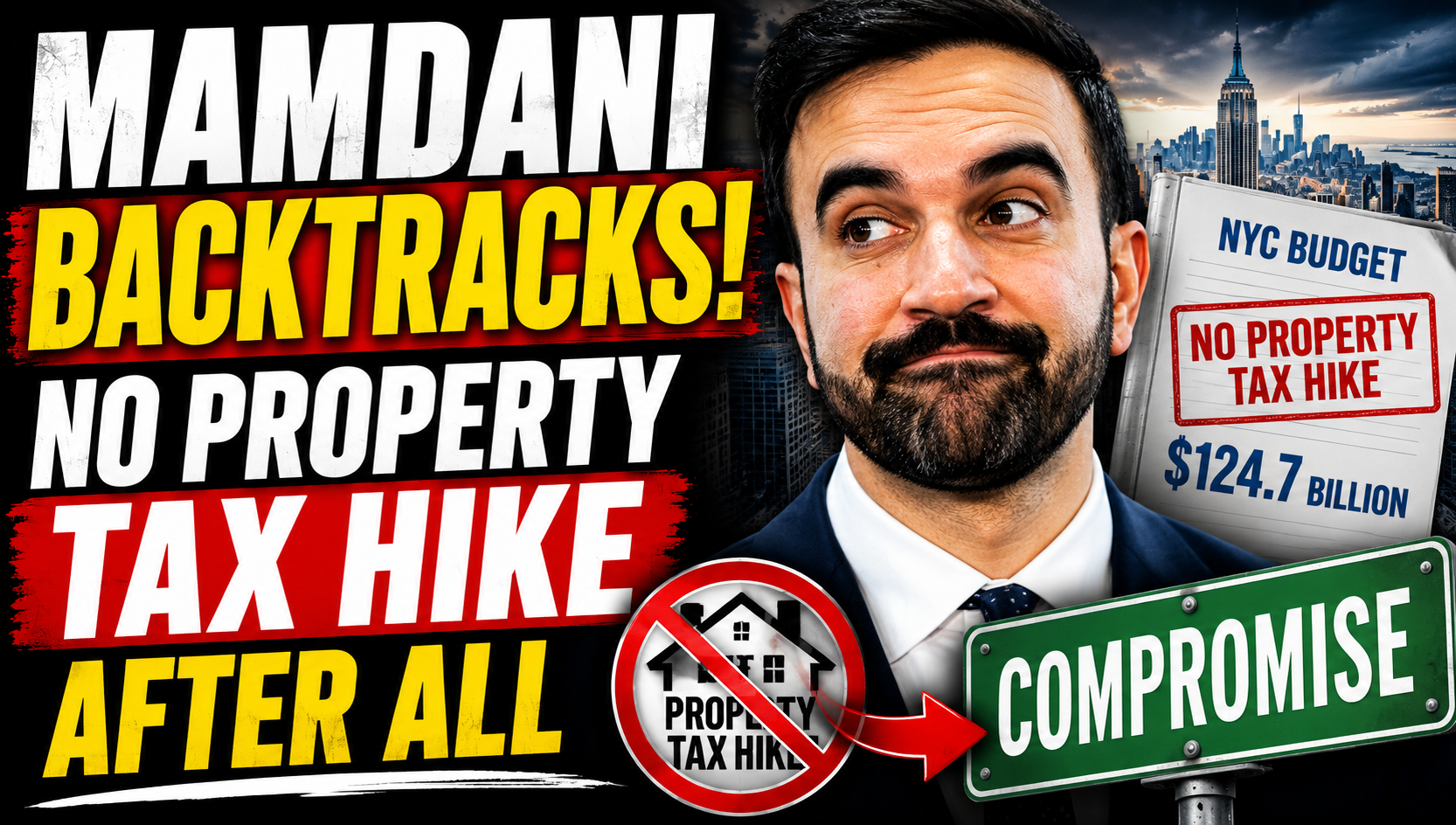
New York City Mayor Zohran Mamdani is facing criticism after backing away from one of his most controversial campaign promises: a sweeping property tax hike designed to fund his democratic socialist agenda.
Mamdani, who surged into office earlier this year championing policies like free bus service, government-run grocery stores, and expanded public programs, had originally proposed raising property taxes across the city by nearly 10 percent.
The plan would have generated roughly $3.7 billion in new revenue annually — but critics warned it would hammer homeowners, landlords, renters, and small businesses already struggling under crushing costs in the nation’s most expensive city.
Now, just months later, Mamdani has abruptly reversed course.
Announcing New York City’s new $124.7 billion budget Tuesday, the mayor declared that the spending package “does not raise property taxes” and claimed his administration had pulled the city back from “an existential fiscal break.”
For opponents, however, the move looks less like fiscal leadership and more like political reality colliding with socialist promises.
Mamdani’s original proposal reportedly ran into stiff resistance from moderate Democrats, state officials, and members of the city council who feared the economic fallout of dramatically higher taxes in a city already losing residents and businesses to states like Florida and Texas.
Instead of broad tax hikes, the mayor is now relying on a mix of accounting maneuvers, pension restructuring, and targeted luxury taxes to close New York’s roughly $12 billion budget gap.
One centerpiece of the revised plan is a new “pied-à-terre” tax targeting non-primary residences valued above $5 million — a move projected to generate around $500 million annually.
Supporters argue the compromise shows pragmatism. Critics say it exposes the central flaw of many progressive economic proposals: ambitious promises that collapse once confronted with the realities of budgets, taxpayer flight, and economic pressure.
For many New Yorkers, the broader concern is whether the city can continue sustaining massive government expansion while residents face soaring rents, rising crime concerns, and an ongoing affordability crisis.
The budget battle also highlights a growing divide inside the Democratic Party itself.
While Mamdani rose to power on a wave of activist enthusiasm and socialist rhetoric, establishment Democrats appear increasingly nervous about policies that could accelerate New York’s economic decline or further drive middle-class families out of the city.
The political question now is whether Mamdani’s retreat is merely tactical — or the first sign that even progressive strongholds are beginning to hit the limits of tax-and-spend politics.