

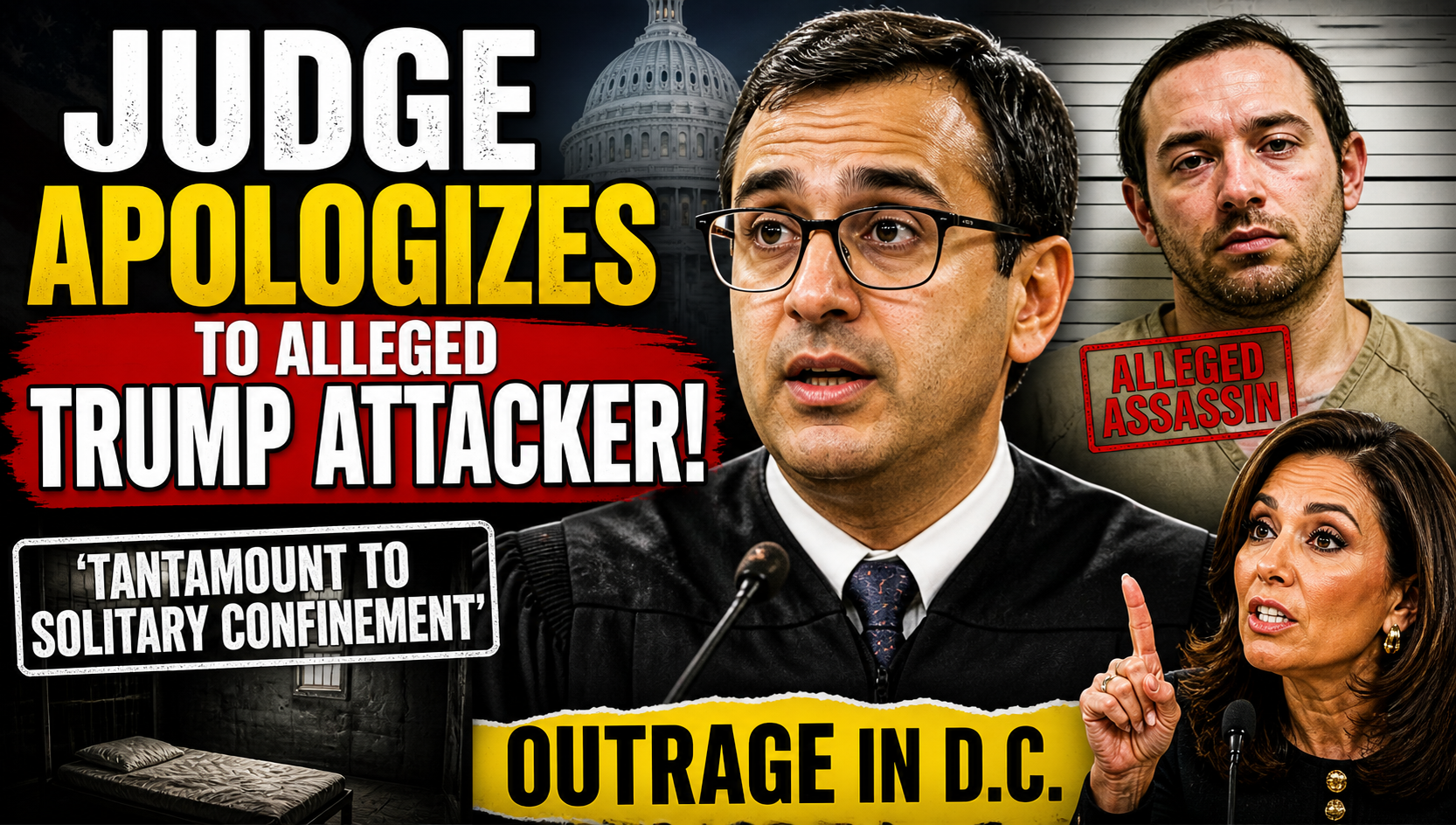
A federal courtroom moment is drawing sharp reaction after a judge apologized to a man accused of attempting to assassinate the president.
During a hearing this week, U.S. Magistrate Judge Zia Faruqui expressed concern over how Cole Tomas Allen has been treated while in custody, saying his conditions in a “safe cell” were “tantamount to solitary confinement.”
Allen, 31, is facing serious federal charges after prosecutors say he attempted to breach a secured event during the White House Correspondents’ Association Dinner while armed. According to the U.S. Department of Justice, the incident involved an alleged attempt to push through security where the president and other top officials were present.
Despite the severity of those allegations, the focus of Monday’s hearing shifted to Allen’s treatment inside the D.C. jail system. His attorneys argued he had been placed on suicide watch without justification, resulting in his confinement in a padded “safe cell” under constant lighting and 24-hour lockdown.
Judge Faruqui appeared to agree that the conditions raised concerns, issuing an apology to the defendant and ordering the D.C. Department of Corrections to quickly determine a more appropriate housing assignment.
That decision immediately sparked criticism from prosecutors.
Jeanine Pirro pushed back forcefully, arguing that a defendant accused of attempting to assassinate the president should not be treated as a special case when it comes to jail conditions.
In a public statement, Pirro said the situation reflected a broader problem, criticizing what she described as preferential concern for a high-profile defendant despite the seriousness of the charges.
The clash highlights a deeper tension in the justice system: how to balance security concerns, due process, and humane treatment—even for those accused of the most serious crimes.
Supporters of the judge’s position argue that constitutional protections don’t disappear at the jailhouse door, and that conditions like prolonged isolation or constant lighting can raise legitimate legal issues regardless of the defendant.
Critics, however, see the apology as misplaced, arguing that someone accused of attempting to carry out a high-level political attack should face strict confinement without exception.
As the case moves forward, the legal battle won’t just center on the charges against Allen—but also on how the system handles defendants accused of extraordinary crimes.
And in Washington, even the conditions of a jail cell can become a national flashpoint.