

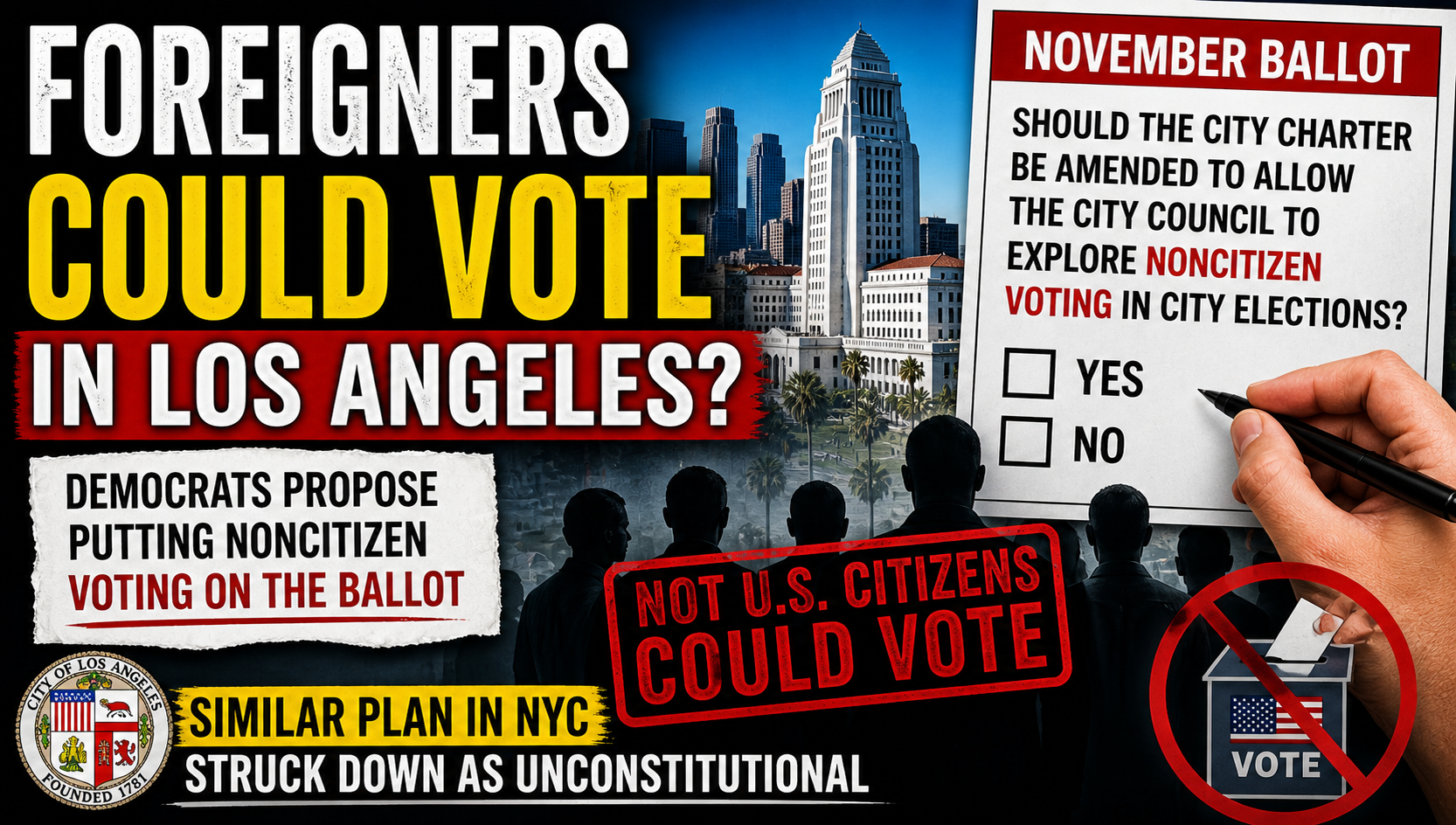
A new proposal introduced in Los Angeles could eventually open the door to noncitizens voting in city elections, though the measure is still in its early stages and faces several procedural steps before any policy change could occur.
The motion, put forward by City Councilmember Hugo Soto-Martinez, does not directly grant voting rights to noncitizens. Instead, it would ask voters in a future election whether the city charter should be amended to allow the City Council to further study or potentially pursue such a policy.
According to public statements, the proposal is framed as a preliminary step. If approved, it would give city officials the authority to explore whether noncitizen participation in municipal elections should be implemented at a later date.
Process Still in Early Stages
Before reaching voters, the proposal must pass through multiple levels of review. It is expected to first go through the council’s rules committee and then require approval from the full City Council. Only after clearing those steps could it appear on a ballot for public consideration.
If ultimately placed before voters and approved, the measure would not automatically change voting laws. Rather, it would allow the city to formally examine or draft policies related to noncitizen voting.
Similar Efforts in Other Cities
The idea of allowing noncitizens to vote in local elections has been debated in several U.S. jurisdictions, often limited to municipal races such as school board or city council contests.
In New York City, a similar effort by the city council sought to extend voting rights in local elections to certain noncitizens. However, the policy was challenged in court.
In 2024, the New York Court of Appeals ruled that the measure violated the state constitution. The court found that existing constitutional language restricts voting rights to citizens, effectively blocking the policy from taking effect.
Ongoing National Debate
The Los Angeles proposal enters a broader national conversation about voting eligibility, local governance, and the role of municipalities in setting election rules.
Supporters of such measures in various cities have argued that noncitizens—particularly legal residents—contribute to local communities and should have a voice in municipal decisions that affect daily life, such as schools, housing, and public services.
Opponents have raised concerns about constitutional limits, election integrity, and the distinction between local and national voting rights.
As the Los Angeles proposal moves through the legislative process, its outcome will depend on both city officials and, potentially, voters themselves.