

For years, Americans have been warned that transgender people face an escalating epidemic of deadly violence.
There is just one problem with that narrative: the reported numbers are moving sharply in the opposite direction.
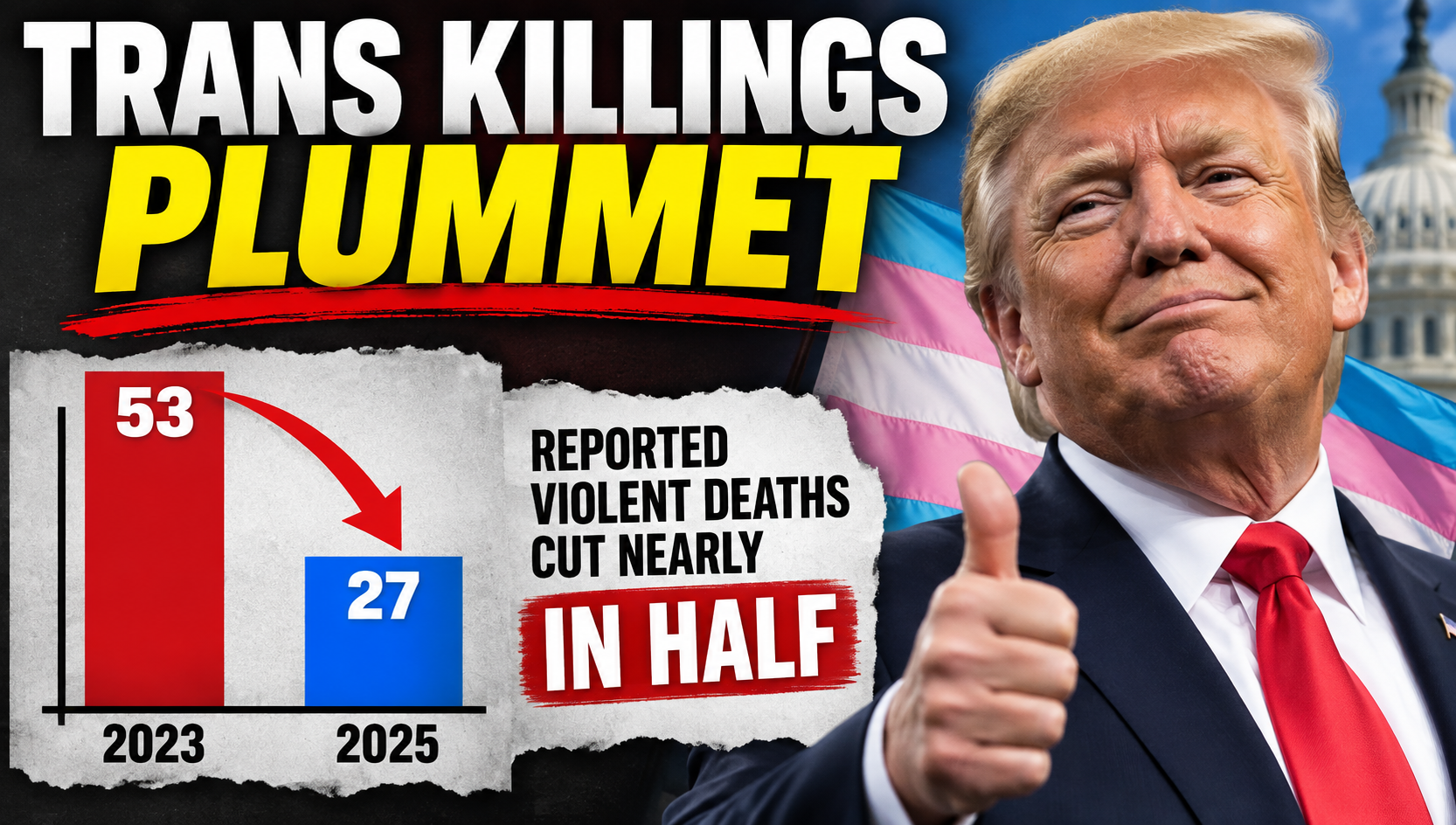
According to figures cited by Boston Globe columnist David Mastio, Advocates for Trans Equality recorded 53 violent deaths of transgender people in 2023. In 2025, the organization recorded 27.
That is a decline of nearly 50 percent.
The Human Rights Campaign’s tracking shows a similar trajectory. Its figures peaked at 47 deaths in 2021 and fell to 27 in 2025.
That should be welcome news.
Every murder is a tragedy, regardless of the victim’s sex, race, religion or gender identity. But if organizations are going to invoke statistics to warn Americans about an epidemic of violence, they also have an obligation to acknowledge when those same statistics improve dramatically.
There are important caveats. Advocacy organizations argue that transgender homicide counts are inherently incomplete because victims can be misidentified in police reports, obituaries and other public records. That is a legitimate limitation when interpreting the numbers.
But it does not justify pretending the available trend does not exist.
Federal hate-crime statistics provide another piece of the picture, although hate crimes and homicides should not be confused. FBI data track crimes reported as motivated by bias, while advocacy organizations’ homicide databases attempt to identify transgender people killed violently. They are different measurements and neither provides a perfect estimate of an individual’s overall risk of being murdered.
That distinction matters because rhetoric about an ongoing “genocide” makes an empirical claim about the scale and nature of violence. Such claims should be subjected to the same scrutiny as any other political assertion.
The larger question is why declining violence isn’t being greeted as an achievement.
Mastio, who writes that he has a transgender person in his own close family, argues that relentlessly telling transgender Americans that death is waiting around every corner can itself be harmful. His point is straightforward: if the best available numbers are improving, people deserve to know that.
There is also a broader statistical question that often disappears from this debate: What is the homicide rate among transgender Americans compared with the homicide rate for Americans generally?
Raw numbers alone cannot answer that question. Researchers need a reliable estimate of the transgender population, consistent definitions and accurate identification of victims. Different methodologies can produce different results.
What the current numbers can tell us is simpler.
The most widely cited advocacy organizations are recording substantially fewer violent deaths of transgender Americans than they did only a few years ago.
That does not mean anti-transgender violence doesn’t occur. It does.
It does not settle debates over bathrooms, women’s sports, medical treatment for minors or gender policy. Those questions have to be argued on their own merits.
And it certainly doesn’t mean 27 deaths should be dismissed.
But a decline from 53 reported violent deaths to 27 is significant enough that anyone who spent years highlighting the first number should be willing to acknowledge the second.
Bad news shouldn’t become more valuable than good news simply because the bad news better serves a political narrative.
If violence is falling, say so.
And then hope it keeps falling.