

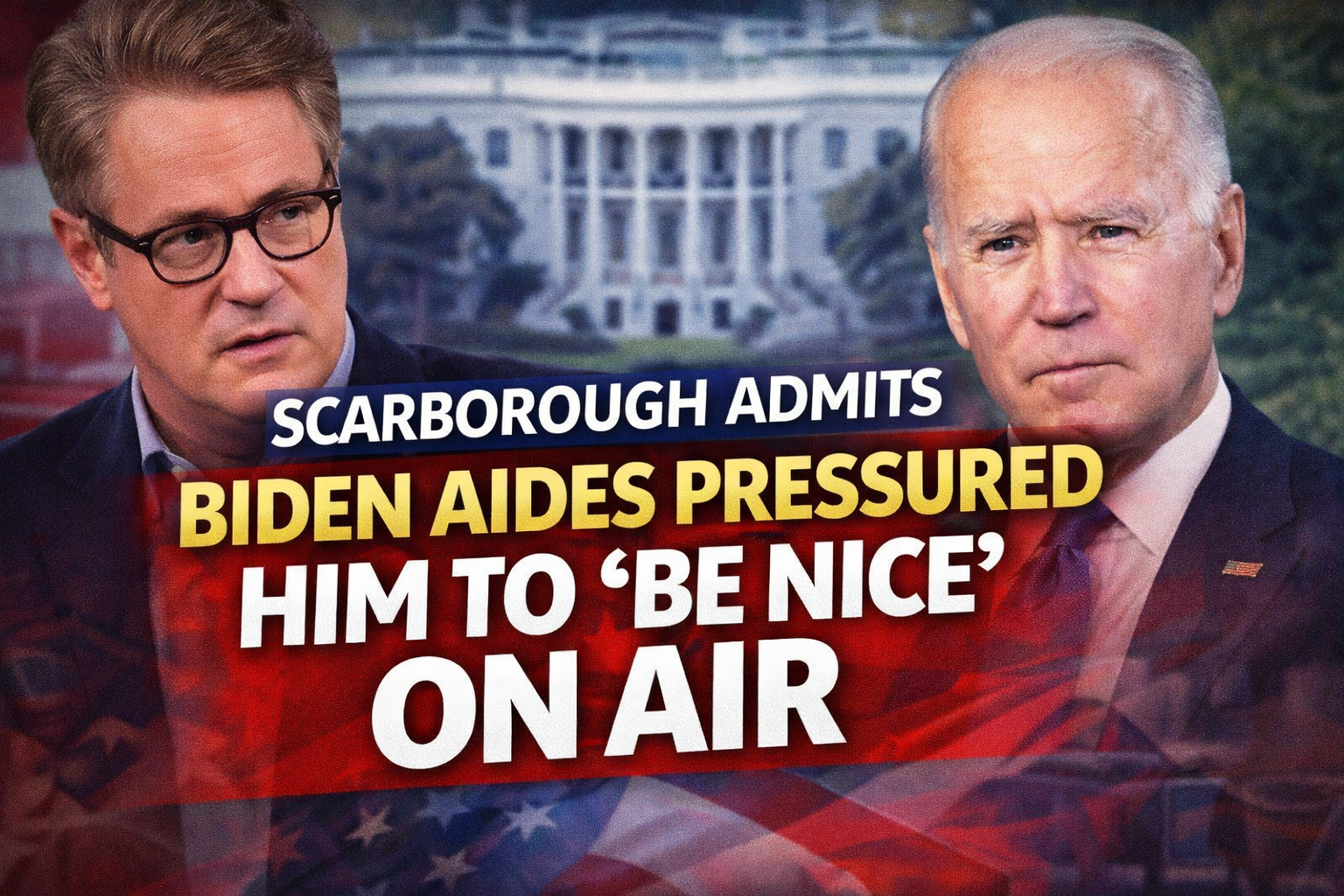
MSNBC host Joe Scarborough revealed this week that aides to former President Joe Biden routinely contacted him to soften his criticism when the president was watching Morning Joe—a disclosure that is reigniting questions about media access, pressure, and journalistic independence during Biden’s presidency.
Appearing on Jimmy Kimmel Live!, Scarborough said senior Biden staffers would occasionally reach out with a clear message: harsh commentary made their jobs harder.
“I would hear from the chiefs of staff that worked for him,” Scarborough said. “‘Be nice to the president. Because when you’re critical, well, it kind of screws up our day.’”
Scarborough insisted the requests did not alter his coverage. Still, the admission offered a rare glimpse into the unusually close feedback loop between a sitting White House and one of cable news’ most influential morning programs.
A Relationship Closer Than Arm’s Length
The revelation adds context to years of criticism that Morning Joe functioned less as an adversarial news program and more as a friendly venue for Biden and his allies. Scarborough and co-host Mika Brzezinski were frequent defenders of the president, particularly during periods when concerns about Biden’s age and cognitive fitness were dominating public discourse.
That dynamic came into sharper focus after Scarborough reminded viewers in March 2024 that Biden was, in his words, “the best Biden ever.”
“He’s far beyond cogent,” Scarborough said at the time. “This version of Biden, intellectually, analytically, is the best Biden ever.”
Those comments would later haunt the MSNBC host.
After the Election, a Reversal
Following Biden’s withdrawal from the 2024 race and the subsequent loss by former Vice President Kamala Harris to Donald Trump, a series of books and insider accounts detailed serious concerns within the Biden White House about the president’s health and stamina—concerns that were allegedly downplayed publicly while acknowledged privately.
In May 2025, Scarborough conceded he had been “obviously wrong” in his glowing assessment, explaining that he had relied on personal interactions rather than internal knowledge.
The contrast between those earlier assurances and later admissions has fueled skepticism about whether prominent media figures asked tough enough questions when it mattered most.
Trump, Walz, and the Role of Media Intermediaries
Scarborough also told Kimmel that former President Donald Trump likely watches Morning Joe as well, recounting a private phone call he initiated with Trump following the president’s conversation with Minnesota Governor Tim Walz about unrest in Minneapolis.
Scarborough said he encouraged Trump to make those conversations public, arguing Americans benefit from seeing leaders communicate across party lines.
The anecdote reinforced Scarborough’s self-described role not merely as a commentator, but at times as an informal intermediary—an approach that critics say blurs the line between journalism and participation in political power.
Media, Access, and Accountability
The disclosure has prompted renewed debate over whether elite media figures grow too close to the politicians they cover, particularly when access is frequent and personal.
While Scarborough maintains his intentions were rooted in wanting “a better country,” critics argue the Biden staff’s requests—combined with years of unusually favorable coverage—illustrate how soft pressure can shape narratives without explicit censorship.
Biden’s office did not respond to requests for comment.
As trust in legacy media continues to erode, Scarborough’s candid remarks may serve as an unintended case study in how influence operates behind the scenes—not through formal orders, but through quiet reminders about who’s watching, and who doesn’t want their day “screwed up.”