

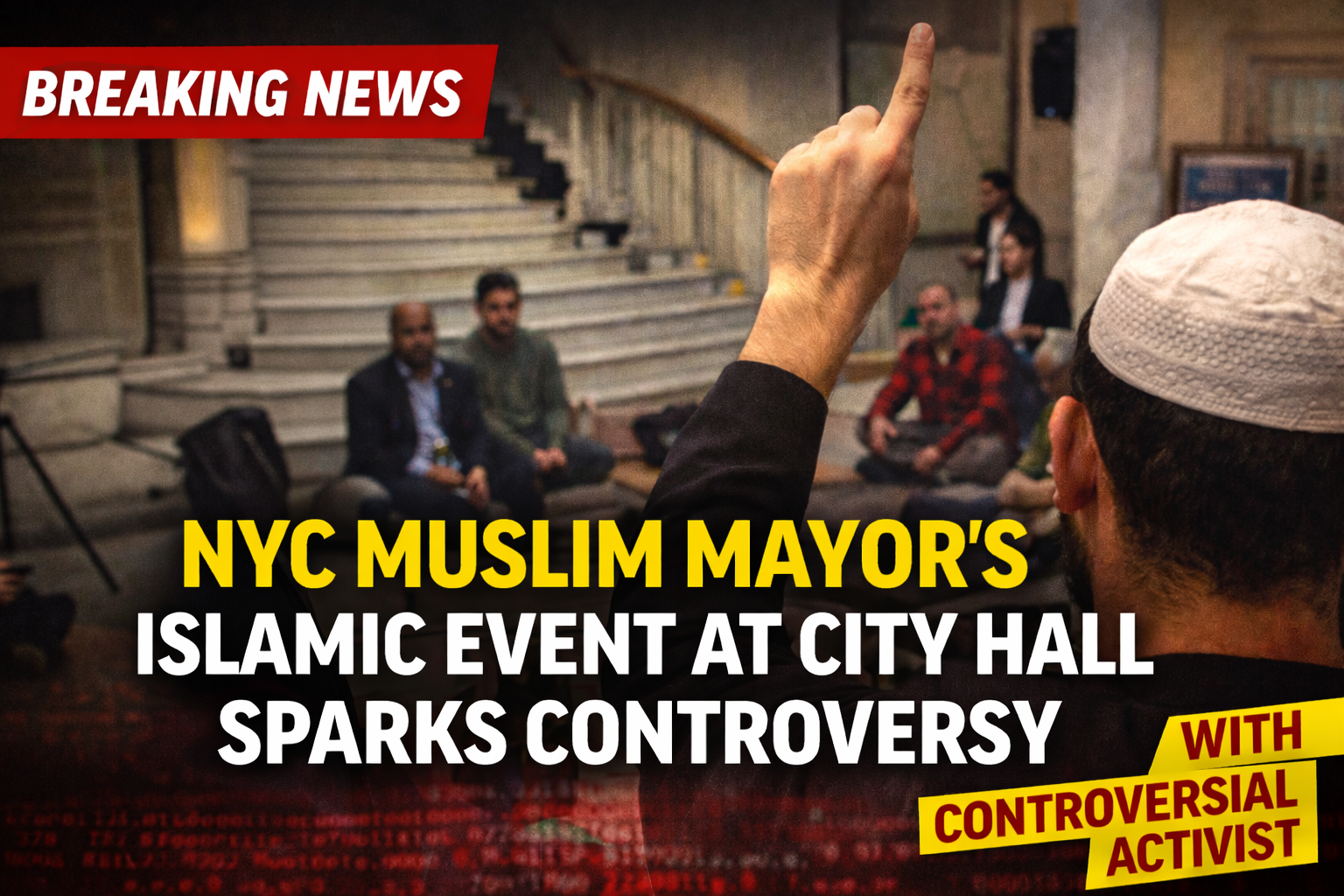
New York City’s mayor is facing mounting criticism after hosting an Islamic religious observance inside City Hall, an event that has quickly ignited a broader political fight over religion, symbolism, and foreign policy.
On March 11, Mayor Zohran Mamdani used City Hall to mark an Islamic holiday, inviting activists and community leaders to participate in the ceremony. Photos from the event circulated widely online, showing attendees seated on the floor in a traditional setting and several guests displaying a raised single-finger gesture associated with the Islamic concept of tawhid, or the oneness of God.
The imagery triggered immediate backlash from critics who argued that the symbolism carries controversial associations in global politics, particularly because extremist groups have also used the gesture in propaganda.
Supporters of the mayor pushed back, saying the symbol has long been used by Muslims worldwide as a religious expression and should not automatically be interpreted through the lens of extremist groups.
A Political and Cultural Flashpoint
The event comes amid growing national debate over how public officials engage with religious communities and how symbolism can be interpreted in a politically charged environment.
Critics say City Hall should remain strictly neutral when it comes to religious displays.
“This crosses the line between acknowledging a community and promoting a religious message,” said one commentator who criticized the event on social media.
Others argue that New York — one of the most religiously diverse cities in the world — routinely hosts celebrations and recognitions for many faith traditions.
Supporters of the mayor say the event was simply another example of the city acknowledging the cultural and religious diversity of its population.
Controversy Over Activists
Adding fuel to the controversy are Mamdani’s past interactions with political activists involved in pro-Palestinian demonstrations.
The mayor has defended individuals who have been outspoken critics of Israel’s military operations in Gaza, describing their activism as protected political speech.
That position has drawn sharp criticism from some political opponents who say certain protests have crossed the line into endorsing extremist groups.
Legal scholars note that the debate highlights a broader tension in American politics between free speech protections and public backlash over controversial political positions.
Religion, Politics, and New York’s Identity
The controversy surrounding the City Hall event reflects a larger national conversation about how religion intersects with politics in a pluralistic society.
New York has long hosted public celebrations tied to religious holidays from many traditions — including Christmas tree lightings, Hanukkah menorah ceremonies, Eid gatherings, and Diwali festivals.
Supporters of Mamdani say the City Hall event should be viewed in that context.
Critics argue the symbolism used at the gathering, combined with the mayor’s political alliances, sends a more controversial message.
A Debate That Isn’t Ending Soon
As the images continue to circulate online, the debate surrounding the event shows no signs of fading.
For supporters, the ceremony represents a mayor acknowledging the faith and culture of Muslim New Yorkers.
For critics, it raises deeper questions about symbolism, political alliances, and the role of religion inside government institutions.
In a city known for intense political battles and cultural diversity, the controversy is likely to remain a flashpoint as New York’s political landscape continues to evolve.