

A new Department of Homeland Security watchdog report is raising fresh questions about the chaotic Afghan resettlement effort that followed the 2021 U.S. withdrawal from Afghanistan.
The DHS Office of Inspector General reviewed a statistical sample of 678 asylum applications from 13,682 adjudicated applications involving Afghans who entered the United States through Operation Allies Welcome.
What investigators found was alarming.
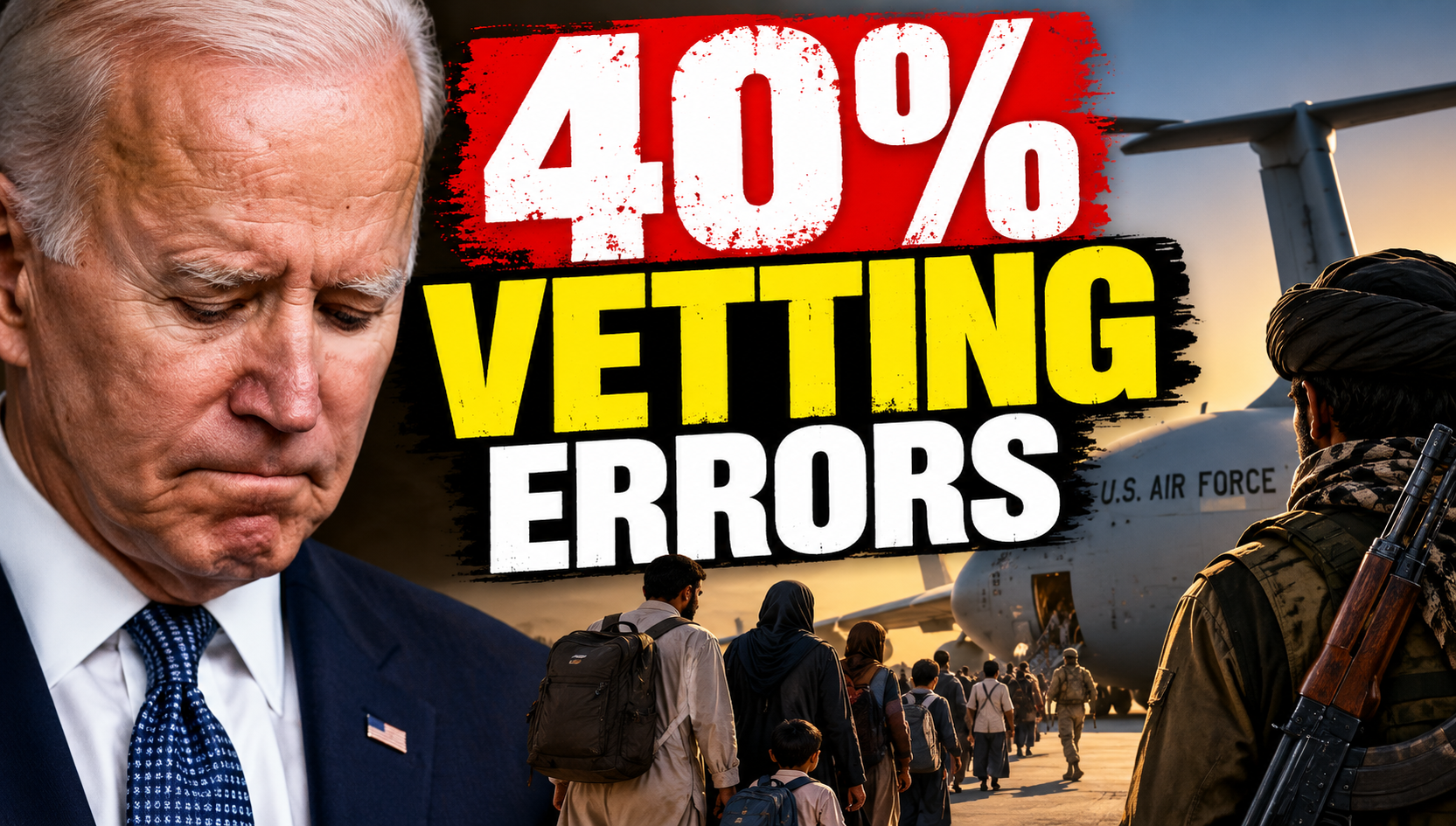
According to the Inspector General, roughly 40 percent of the files reviewed contained errors related to vetting or documentation.
The watchdog identified 303 missed aliases, 23 missing security checks, 45 unresolved records and 115 other documentation problems.
The report warned that the errors may have prevented immigration officials from connecting some applicants with potentially derogatory information contained in government databases.
Most of the problems involved missed aliases or incomplete paperwork. But the Inspector General also identified two cases involving potential inadmissibility on terrorism-related grounds.
That distinction matters. The report does not say that 40 percent of Afghan evacuees were security threats. It says errors were found in roughly 40 percent of the asylum files examined. Still, in a system designed to determine who is entering the country and whether that person poses a security risk, missing aliases and security checks are hardly trivial clerical mistakes.
Operation Allies Welcome was created following the collapse of the Afghan government and the withdrawal of American forces in 2021. Approximately 75,000 Afghans were brought to the United States during the initial evacuation and resettlement effort.
The latest findings add to years of scrutiny over how thoroughly those evacuees were screened before and after entering the country.
And there have been serious cases since.
Nasir Ahmad Tawhedi, an Afghan national living in Oklahoma, pleaded guilty in June 2025 to terrorism-related offenses after admitting that he planned an ISIS-inspired mass-casualty attack around Election Day 2024. According to the Justice Department, Tawhedi and a co-conspirator sought two AK-47-style rifles, 500 rounds of ammunition and 10 magazines for the attack.
The FBI stopped the plot before it could be carried out.
Tawhedi’s case does not establish that the specific errors identified in the new Inspector General review caused his admission into the country. But it illustrates why the accuracy of immigration security checks matters.
The latest watchdog findings also revive a basic question left hanging over Operation Allies Welcome: When the United States was moving tens of thousands of people out of Afghanistan at extraordinary speed, did speed come at the expense of adequate screening?
The Inspector General’s findings document hundreds of errors in the files it examined.
Four years after the evacuation, Americans are still learning just how many holes were left in the system.