

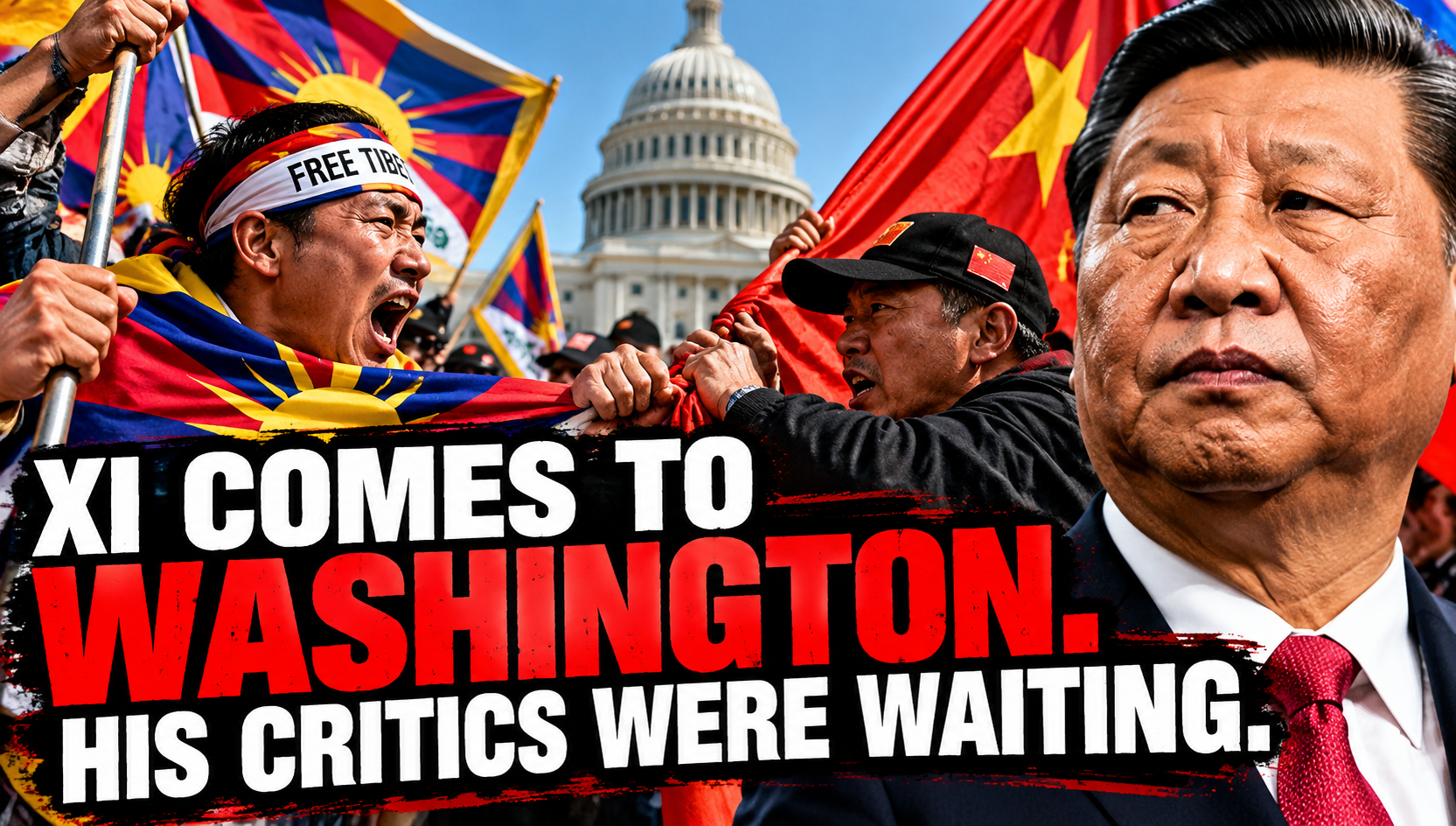
Chinese President Xi Jinping arrived in Washington this week for a high-profile state visit. But outside the ceremonies and diplomatic meetings, another side of China was on display.
Thousands of Tibetans and other critics of Beijing descended on the capital to protest Xi’s visit, with demonstrators carrying Tibetan flags and calling attention to China’s human-rights record.
Then things got ugly.
Pro-China counter-protesters confronted Tibetan activists along Xi’s route, with videos and activist accounts showing pushing and attempts to obscure anti-Xi banners with Chinese flags. Tibetan groups also accused some counter-protesters of trying to intimidate and disrupt demonstrators.
The scenes unfolded as Xi began a state visit to the United States from September 23 through September 25 at President Donald Trump’s invitation. Reuters confirmed large “Free Tibet” demonstrations in Washington on Thursday, including outside the Chinese Embassy and on the National Mall.
Thousands Turn Out Against Xi
The protests weren’t limited to Tibetans.
Uyghurs, Hong Kong activists, Chinese democracy advocates and others joined demonstrations intended to put Beijing’s human-rights record front and center while Xi met with Trump.
Tibetan activists specifically highlighted Beijing’s policies toward Tibetan culture, religion and political expression. One former Tibetan parliamentarian attending the protest told Radio Free Asia that demonstrators believed Xi’s policies were threatening Tibetan culture and identity.
Protesters also called on Trump to raise Tibet and other human-rights issues directly with Xi. The International Campaign for Tibet had made a similar appeal ahead of the summit, urging the administration to press Beijing over political prisoners, the Panchen Lama and restrictions on Tibetan religious and cultural life.
Two Very Different Welcomes
The demonstrations produced a striking scene in the nation’s capital.
On one side were protesters waving Tibetan flags and denouncing the Chinese Communist Party. On the other were Xi supporters carrying the flag of the People’s Republic of China.
According to Tibetan activist groups and media covering the demonstrations, some of those encounters went beyond dueling chants. Pro-China demonstrators were seen pushing activists and using large Chinese flags to block Tibetan banners from view.
The confrontations are particularly notable because human-rights organizations have spent years warning about what they describe as Beijing’s efforts to suppress criticism beyond China’s borders. Ahead of Xi’s visit, Freedom House specifically warned about Chinese government-linked efforts to undermine free expression abroad.
Beijing’s Critics Refuse to Stay Quiet
Inside the White House, Trump and Xi faced enormous questions involving trade, artificial intelligence, Taiwan and the broader U.S.-China relationship.
Outside, the message was considerably simpler.
Xi could travel thousands of miles from Beijing, receive the ceremonies of a state visit and sit down with the president of the United States.
But his critics were waiting for him in Washington.
And they weren’t staying quiet.