

Russia’s war in Ukraine just crossed another dangerous threshold.
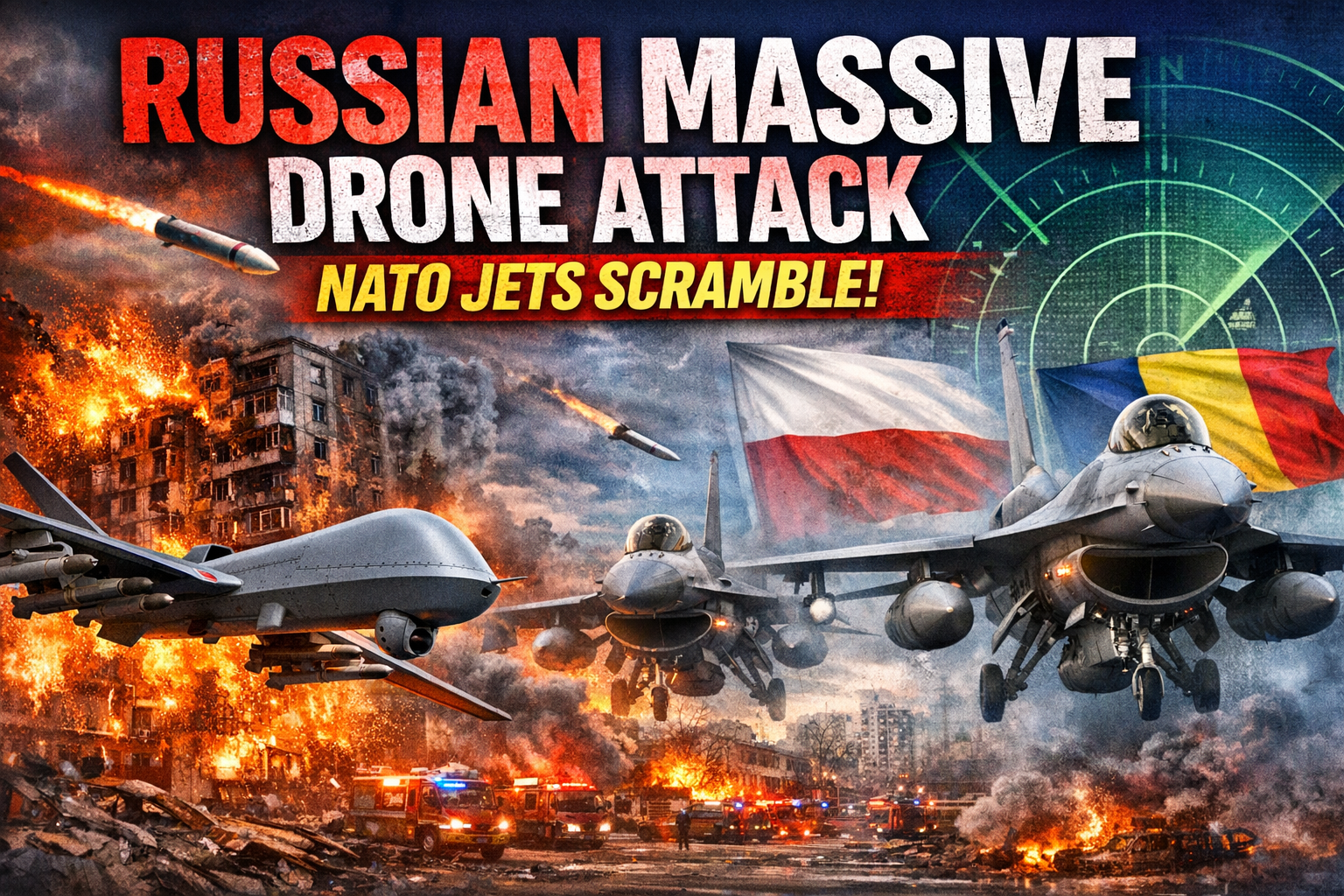
In one of the largest aerial assaults of the conflict, Moscow launched nearly 400 drones alongside cruise and ballistic missiles in a coordinated overnight strike—triggering NATO fighter jets to scramble as the attack pushed dangerously close to alliance airspace.
A Night of Fire Across Ukraine
The масштаб of the attack was staggering.
Ukrainian officials reported waves of drones, followed by 23 cruise missiles and seven ballistic missiles, slamming into targets across the country. Major cities—including Kyiv, Zaporizhzhia, and Kharkiv—were hit, with at least four people killed and dozens more injured.
Residential buildings burned. Emergency crews raced to contain fires. And once again, civilians bore the brunt of the escalation.
While Ukraine’s air defenses reportedly intercepted many of the incoming threats, enough slipped through to strike at least ten locations—underscoring the sheer volume and intensity of the assault.
NATO on Edge
The most alarming development wasn’t just the scale—it was how close the strikes came to pulling NATO directly into the conflict.
As Russian drones and missiles approached NATO borders, Poland and Romania scrambled fighter jets in response.
Poland placed its air defenses on the highest state of readiness, with officials confirming that allied air forces were actively operating in its airspace due to Russian activity.
Romania, meanwhile, launched F-16s after drones were detected near the Danube River—one of the natural boundaries between Ukraine and NATO territory.
This is the line everyone has been watching.
And it’s getting thinner.
A War Expanding in Real Time
Military analysts say this isn’t just another barrage—it’s the opening phase of something larger.
Recent days have seen hundreds of ground assaults along the 750-mile front line, and the scale of this aerial strike suggests Russia’s long-anticipated spring-summer offensive may already be underway.
The timing is no coincidence.
Just one day earlier, Ukraine struck Russia’s key Baltic port of Primorsk, setting off fires at a major export hub. The latest barrage appears to be both retaliation—and escalation.
The Risk of Spillover
What makes this moment especially volatile is the growing overlap between battlefield operations and NATO territory.
Each drone that veers off course…
Each missile that strays too close…
Each scramble of fighter jets…
…raises the stakes.
Because if even one strike crosses the line, intentionally or not, the consequences could be immediate—and global.
Russia has already issued warnings.
Its ambassador to London threatened “dire consequences” over Western involvement in Ukrainian strikes inside Russian territory, particularly the use of advanced missile systems.
The message is clear: escalation will not be one-sided.
No End in Sight
Despite intermittent peace talks, the war shows no signs of slowing.
Russia has rejected ceasefire proposals. Ukraine continues to strike strategic targets. And both sides appear to be preparing for a prolonged, intensified phase of conflict.
For civilians, that means more nights like this one.
For NATO, it means constant vigilance—and growing risk.