

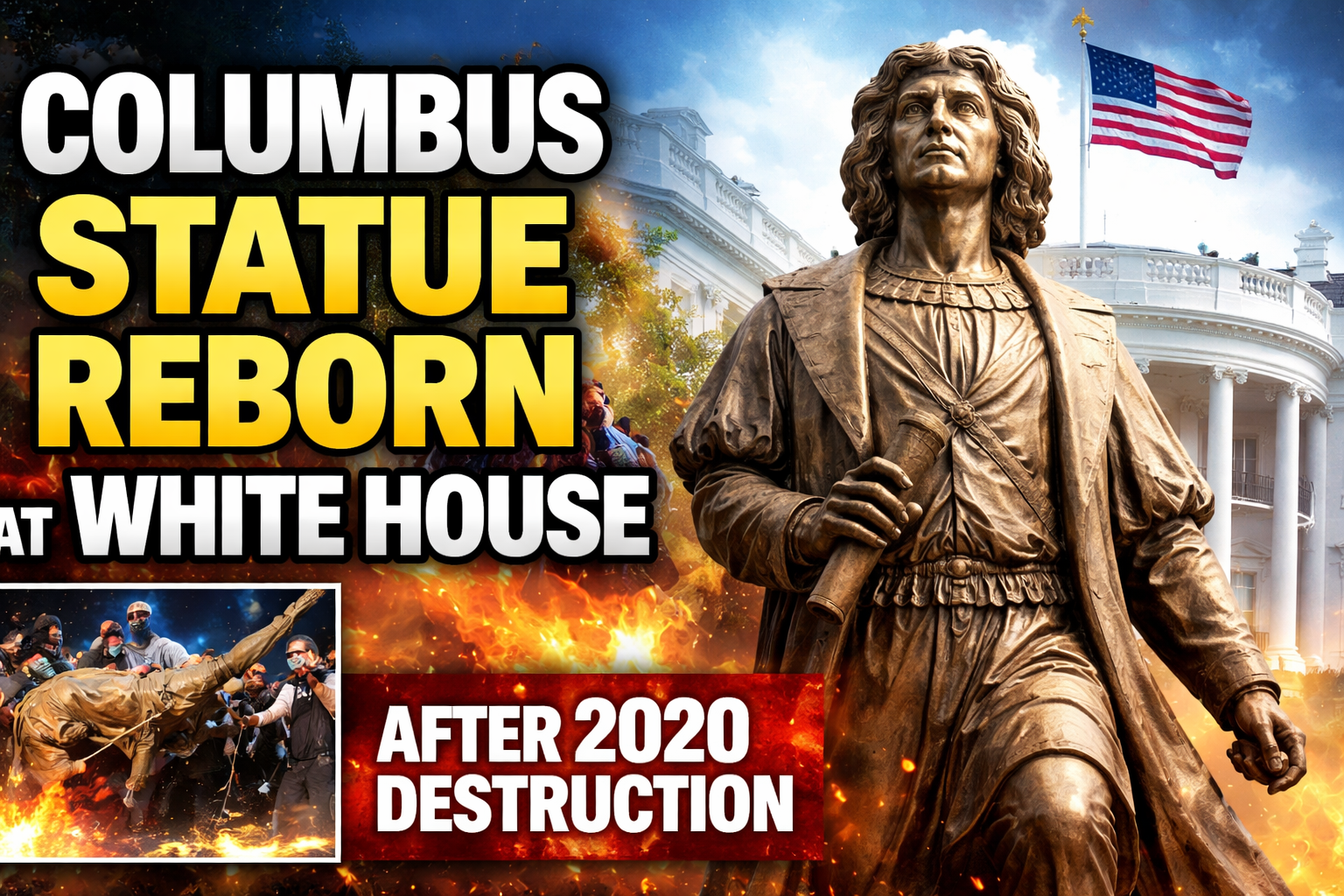
A statue of Christopher Columbus has been erected on White House grounds near the Eisenhower Executive Office Building, directly challenging the wave of monument removals that swept the country in 2020.
The new statue isn’t just symbolic—it’s built from the remains of the original monument torn down by protesters in Baltimore and dumped into the harbor during the height of the unrest. Years later, those same fragments now stand restored at the center of American political power.
The project was commissioned by the Conference of Presidents of Major Italian American Organizations (COPOMIAO), after Baltimore officials declined to reinstall the statue publicly. That refusal ultimately led organizers to bring the effort to President Trump.
Originally unveiled in 1984 by President Ronald Reagan, the Baltimore Columbus statue had stood for decades before being destroyed during the riots. Now rebuilt and relocated, COPOMIAO says its return represents more than just a monument—it marks a revival of Italian American heritage and a nod to America’s approaching 250th anniversary.
For many Italian Americans, Columbus has long been a symbol of identity and perseverance. COPOMIAO President Basil M. Russo emphasized that Columbus Day itself gained national significance following the 1891 lynching of 11 Italian immigrants in New Orleans—an event that spurred efforts to recognize and integrate Italian Americans into broader society. In that context, Columbus became less a historical figure and more a unifying cultural symbol.
The statue’s destruction in 2020 told a different story.
Footage from that night showed protesters in Baltimore pulling the monument down as crowds cheered. It shattered on impact before being dragged through the streets and thrown into the harbor. For critics, it wasn’t just vandalism—it was a rejection of dialogue altogether. One witness at the time described the scene as activists “forcing their agenda” rather than engaging in meaningful debate.
Those behind the removals argued Columbus represented exploitation and violence toward Native Americans, a claim that fueled similar actions across the country.
But others pushed back, arguing the historical narrative had been oversimplified and weaponized. Writers and historians pointed out that many of the evils attributed solely to European arrival—slavery, conflict, and conquest—already existed among civilizations in the Americas long before Columbus ever set sail. What Europe introduced, they argued, was something different: a religious and philosophical framework that emphasized the inherent value of every human life, even if imperfectly applied.
The debate, then and now, is less about Columbus himself and more about what the country chooses to remember—and what it chooses to erase.
President Trump made his position clear earlier this year, stating he intended to bring Columbus Day “back from the ashes” after years of political and cultural backlash. Months later, he issued formal proclamations recognizing both Columbus Day and Leif Erikson Day, signaling a broader push to reclaim historical figures that had become flashpoints in America’s cultural divide.
The statue now standing near the White House is not just a restoration. It is a statement—about memory, identity, and the ongoing battle over how American history is told.