

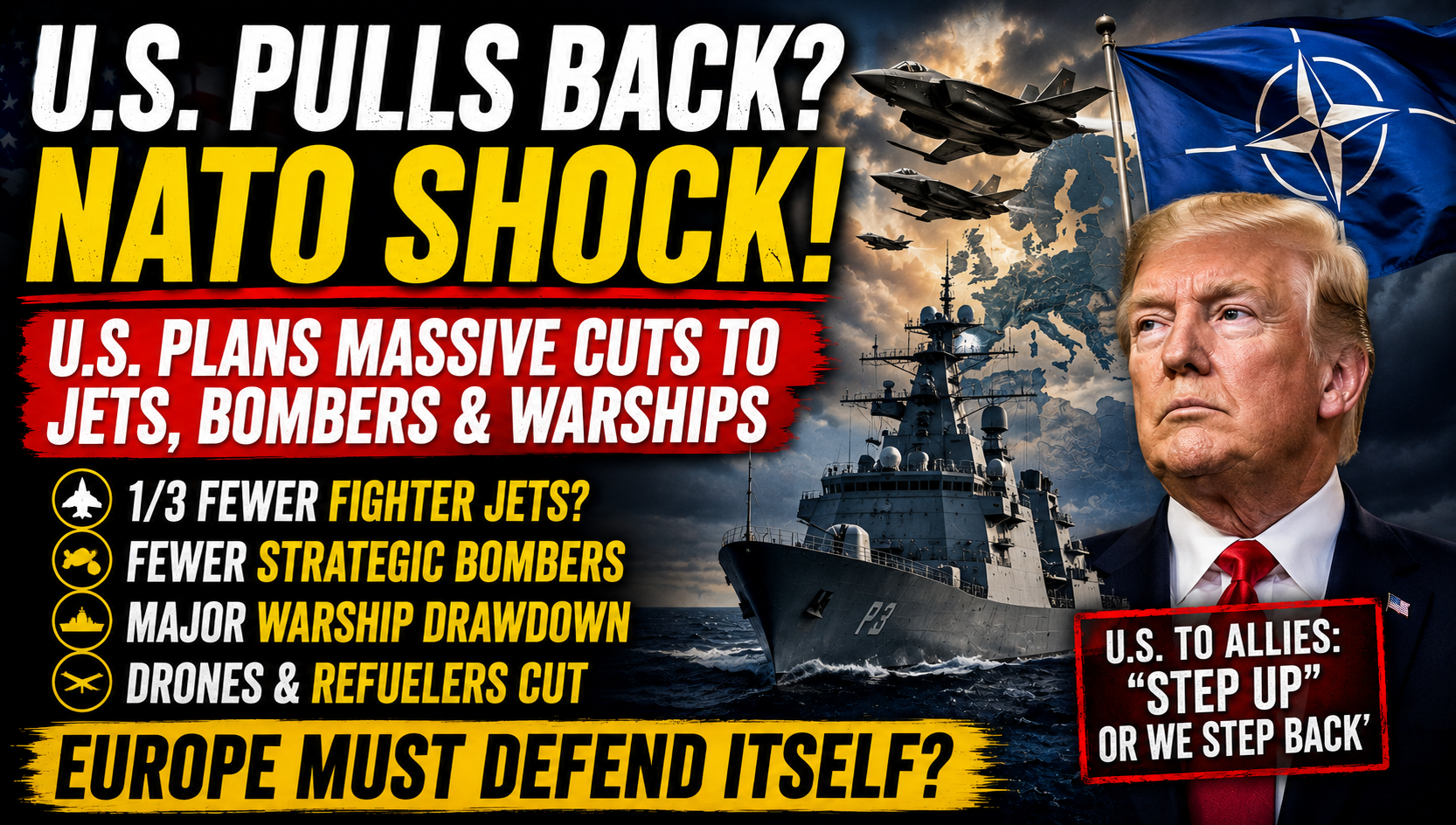
A bombshell report out of Europe is sending shockwaves through NATO.
According to Germany’s Der Spiegel, the United States is preparing to dramatically reduce the number of fighter jets, bombers, warships, drones, and other military assets committed to NATO in future conflicts — a move that could fundamentally reshape the balance of power inside the alliance.
The report claims senior Pentagon officials privately briefed European allies during a confidential NATO meeting in Brussels last week, warning that Washington plans to scale back its role in the alliance’s “NATO Force Model” — the rapid-response framework created after Russia’s invasion of Ukraine in 2022.
European officials were reportedly stunned.
For decades, NATO’s military backbone has effectively been the United States. American fighter squadrons, strategic bombers, naval fleets, surveillance systems, and logistics capabilities have carried much of the alliance’s real deterrent power.
Now, that assumption may be collapsing.
According to the report, Pentagon envoy Alexander Velez-Green informed NATO officials that the U.S. intends to sharply reduce the military assets it keeps on standby for NATO operations. The potential cuts reportedly include drones, aerial refueling aircraft, fighter jets, naval assets, and even America’s strategic bomber commitment.
One proposal under discussion would slash U.S. fighter jet contributions to NATO by roughly one-third.
The timing is no accident.
President Donald Trump has spent years hammering NATO countries for relying on American taxpayers while failing to properly fund their own militaries. His criticism intensified during recent tensions with Iran, where Trump openly questioned whether NATO allies would stand with the United States in a real crisis.
Now it appears the Pentagon may finally be putting muscle behind that message.
According to Der Spiegel, Velez-Green warned allies that Washington would only maintain close military cooperation with nations willing to rapidly expand their own defense capabilities and fill the gaps left behind by the American drawdown.
Many NATO officials reportedly interpreted the comments as a direct warning: Europe may soon be expected to defend itself.
The implications are enormous.
For years, critics argued that much of Europe had become dependent on U.S. military protection while prioritizing social spending, green energy programs, and expansive welfare states over defense readiness. Trump’s allies have repeatedly argued that NATO was never intended to become a permanent American security subsidy for wealthy nations unwilling to fully defend themselves.
If the reported reductions move forward, countries like Germany, France, Poland, and the United Kingdom may face intense pressure to rapidly expand military production, troop readiness, air defense systems, and naval capabilities.
The move could also accelerate a broader geopolitical shift already underway: a world where America becomes more selective about where it projects military power.
Neither the United States Department of Defense nor NATO has officially confirmed the report. But notably, the Pentagon has also not denied it.
If true, the message to Europe is unmistakable:
The era of unlimited American military coverage may be coming to an end.