

The Southern Poverty Law Center built its national reputation exposing extremist groups.
Now federal prosecutors allege the organization was secretly paying them.
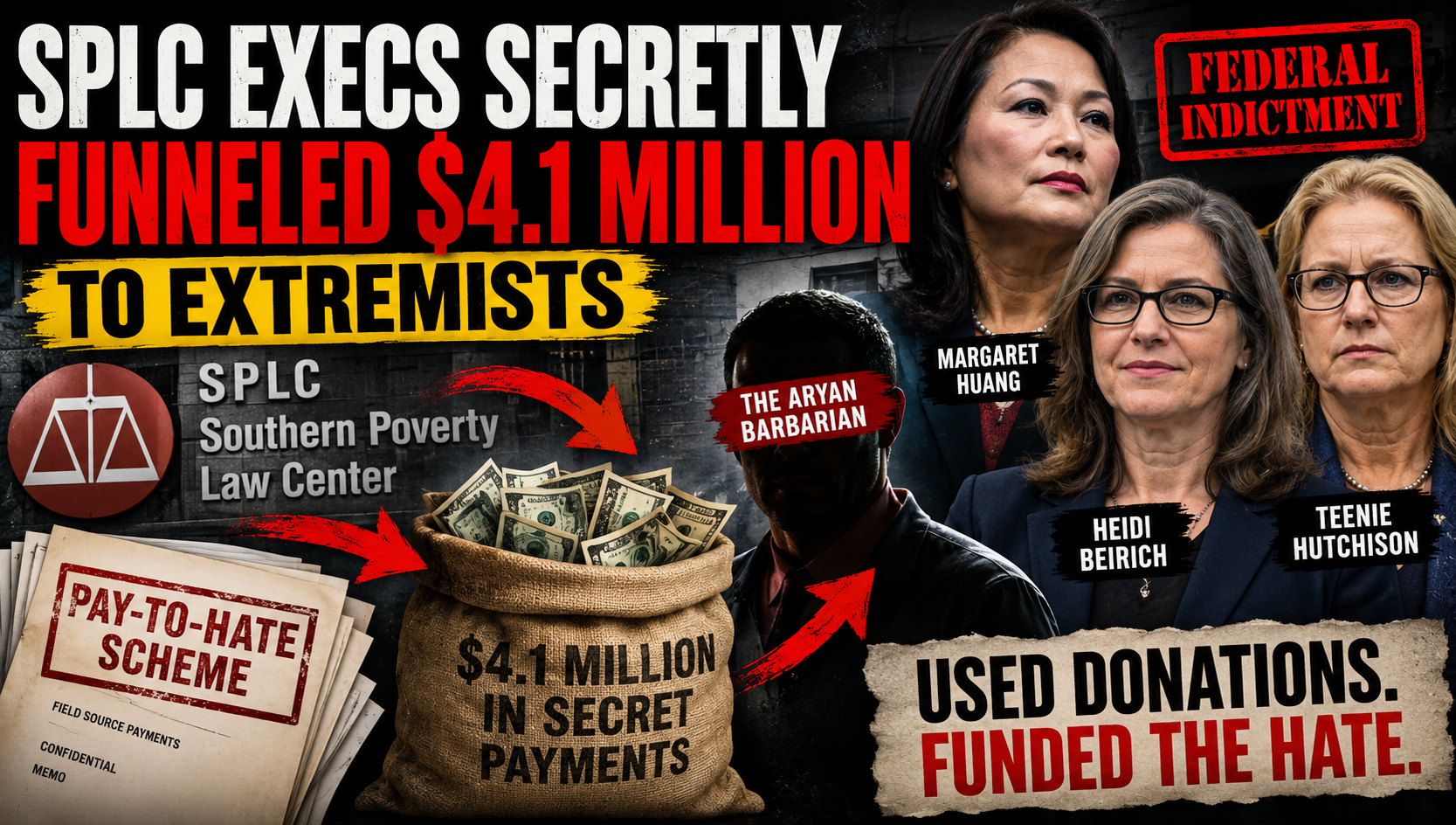
According to a superseding federal indictment, senior officials at the SPLC allegedly created a hidden network of bank accounts that funneled $4.1 million to confidential sources embedded inside extremist organizations over nearly a decade. Among the alleged recipients was Erich Gliebe, the former leader of the neo-Nazi National Alliance, known by the nickname “The Aryan Barbarian.”
The allegations have dramatically expanded a case that prosecutors say involves bank fraud, wire fraud, and conspiracy to commit money laundering, with investigators signaling that additional charges against former executives could still be forthcoming.
According to federal officials, the operation began in 2008 when former SPLC Chief Financial Officer Teenie Hutchison and former Intelligence Project Director Heidi Beirich allegedly established a network of nine bank accounts under names that concealed any connection to the nonprofit. The accounts allegedly operated for years under shell-company names such as “Fox Photography,” “Rare Books Warehouse,” and “Tech Writers Group.”
Prosecutors argue the accounts were designed to disguise the source of payments made to dozens of confidential field sources operating inside extremist movements.
Federal investigators describe the operation as following the classic stages of money laundering: placing funds into hidden accounts, moving them through multiple entities to obscure their origin, and ultimately integrating the information gathered into the SPLC’s public research and reporting.
One of the most explosive allegations involves Gliebe himself.
Federal court filings allege he received more than $140,000 in secret payments between 2016 and 2023 while simultaneously appearing in the SPLC’s own “Extremist Files,” pages that warned visitors about extremist figures while encouraging donations to the organization.
Critics argue the arrangement created a troubling contradiction.
“The government can run informants,” former NYPD intelligence official Paul Mauro told Fox News Digital. “Private industry cannot.”
The investigation also raises questions about how high inside the organization the alleged operation reached.
According to the indictment, Synovus Bank flagged the unusual account structure during an internal review in 2020. Prosecutors allege that in 2021, then-SPLC President Margaret Huang signed a letter acknowledging that the accounts had been opened and operated for the benefit of the organization. Federal investigators argue that document undermines any claim that the banking network was the work of rogue employees acting alone.
The SPLC has denied wrongdoing and has moved to dismiss the case.
Interim CEO Bryan Fair also defended the organization during recent congressional testimony, rejecting the government’s allegations.
The case has also reignited criticism from longtime opponents of the SPLC.
British Muslim reformer Maajid Nawaz, who won a multimillion-dollar defamation settlement against the organization in 2018, said the indictment validates concerns he has raised for years.
“They were taking money to fight hate,” Nawaz said, “and then funding the very hate they took money to fight.”
If prosecutors ultimately prove their allegations, the case could become one of the most consequential nonprofit fraud investigations in recent years, striking at the credibility of one of America’s most influential civil rights organizations.